
Editorials
The Bronzes Are Home. Is Nigeria Ready for Them?
Switzerland's return of eighteen Benin Bronzes and four Ikom monoliths is a milestone in a restitution movement that is starting to outpace the institutions meant to receive it.
SHARE
8 mins
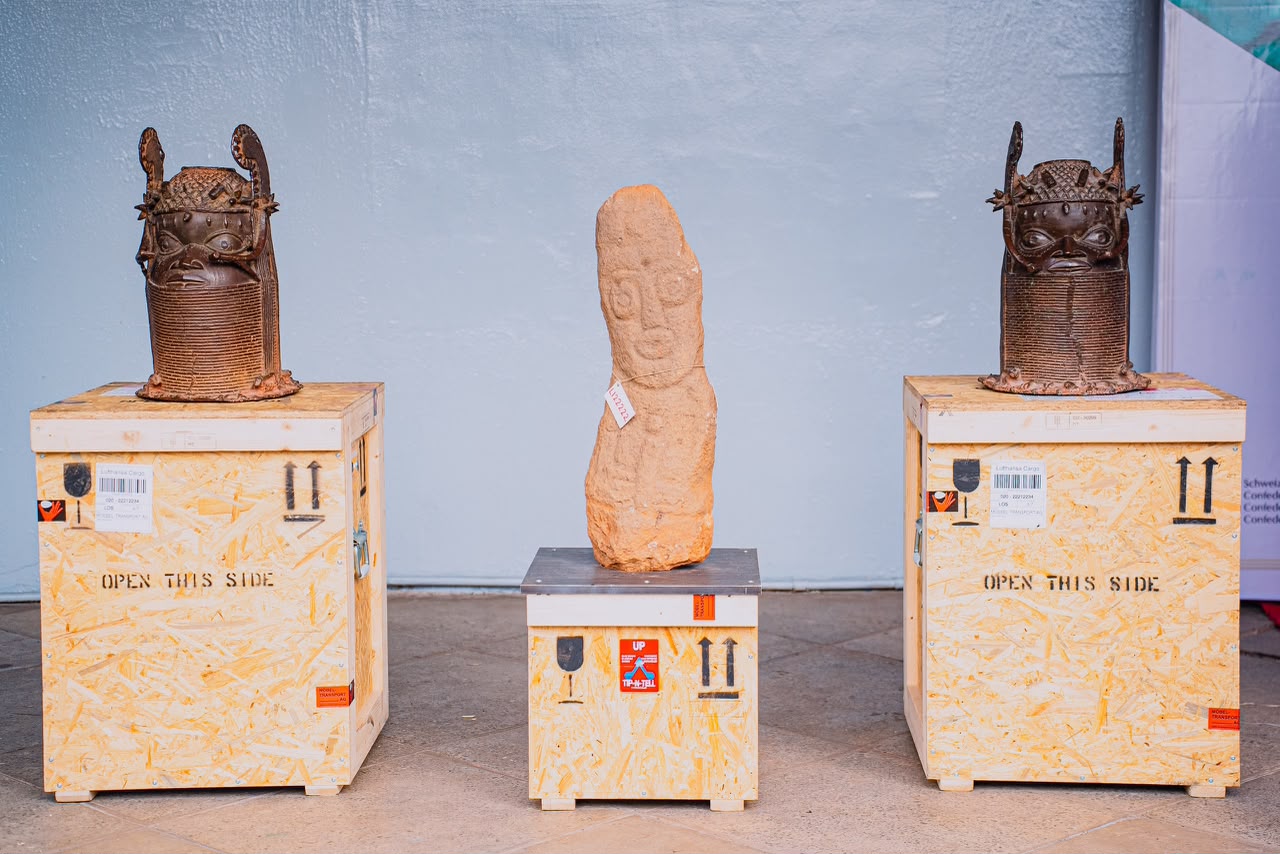
On June 29th, at the National Museum Lagos, Nigeria and Switzerland signed a bilateral agreement governing the import, export and return of cultural property, and Switzerland handed over eighteen Benin Bronzes, four Ikom monoliths and a bronze bracelet. Hannatu Musa Musawa, Nigeria's Minister of Art, Culture, Tourism and the Creative Economy, and Elisabeth Baume-Schneider, a Swiss Federal Councillor, signed the agreement on behalf of their governments. The bronzes came from the Museum of Ethnography in Geneva, the Ethnographic Museum at the University of Zurich and the Museum Rietberg; the monoliths and bracelet had been seized in Switzerland during criminal proceedings and subsequently handed to the Nigerian state. It was one of the more significant restitution ceremonies of the year, and also something quieter: a moment where a century-long argument about theft, memory and ownership resolved, briefly, into paperwork and a handshake.
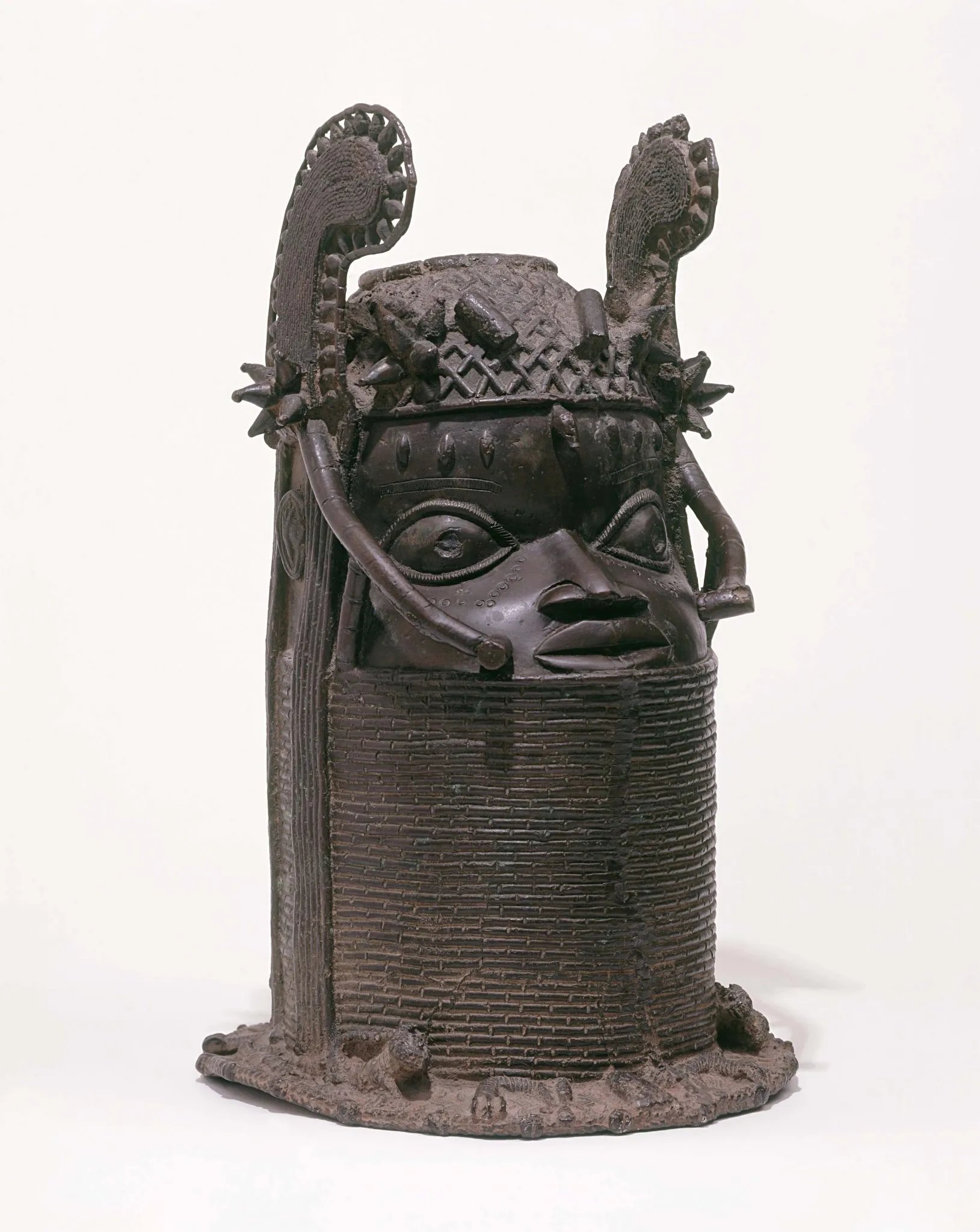
The bronzes themselves carry weight that the ceremony's diplomatic language can only gesture toward. They were taken from the royal palace of the Kingdom of Benin during the British Punitive Expedition of 1897, an act of arson and looting that scattered thousands of brass, bronze and ivory works across museums and private collections in Europe and North America. Baume-Schneider said as much at the ceremony, acknowledging that many of the objects left Benin "as a result of violence, looting and deeply unequal power relations." That she could say this plainly, as a representative of the Swiss state, is itself a marker of how far the conversation has shifted. A decade ago, restitution was a request routinely waved off by museum boards citing universal access or unclear title. Today it is closer to an expectation, one that institutions increasingly move to satisfy before public pressure forces their hand.
What makes the Swiss return notable is its method. The eight participating Swiss museums banded together in 2021 as the Benin Initiative Switzerland, led by Museum Rietberg and backed by the Federal Office of Culture, to conduct joint provenance research across their collections rather than negotiate piecemeal. That model, a coordinated national reckoning, is likely to be studied closely by other countries still holding Benin material, including the United States, where dozens of collections retain looted objects with no coordinated framework for their return. It suggests restitution is maturing.
The four Ikom monoliths deserve their own attention, because they represent a different and less visible strand of loss. Unlike the bronzes, whose theft is well documented and internationally recognized, the monoliths were trafficked more recently and quietly, seized only after they surfaced in the Swiss criminal justice system as stolen property. Their return is a reminder that looting did not end in 1897 and has not stopped; it simply changed shape, moving from colonial armies to smuggling networks and grey art markets that continue to move Nigerian antiquities out of the country.
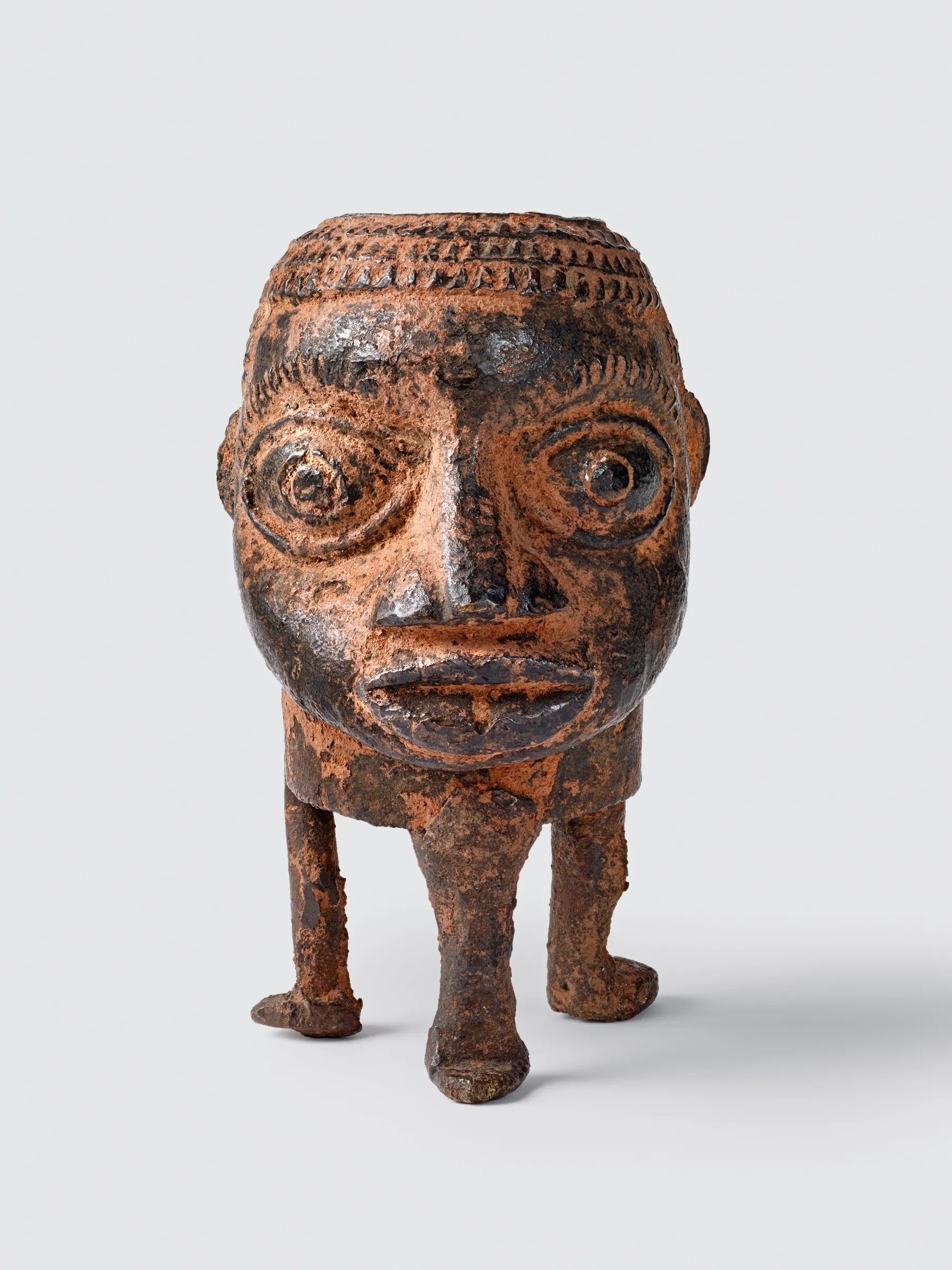
Which brings the harder question into view: what happens to these objects now that they are home. Nigeria has, in recent years, received hundreds of returned artefacts from Germany, the Netherlands, Cambridge, Denver and now Switzerland, and the honest answer is that its capacity to conserve, research and display them at scale has not caught up with the pace of return. The National Museum Lagos, where the ceremony took place, is a proud but under-resourced institution, and the wider question of where Nigeria's returning heritage should live has become genuinely contentious. Benin City's Museum of West African Art, designed by Adjaye Associates and years in the making, was meant to be a flagship answer to exactly this problem, a purpose-built, world-class facility for conservation, research and display. Its troubled opening in November, delayed by protests and a dispute over ownership between the Oba's palace and the museum's leadership, showed how quickly the technical challenge of building institutions collides with older, unresolved questions of custodianship and authority. MOWAA insists it has never claimed ownership of the bronzes and sees its role as building the surrounding infrastructure, conservation labs, training programmes, research capacity, that Nigeria's cultural sector has long lacked. Whether or not the politics around it settle cleanly, the underlying case it makes is hard to dispute: objects can be returned in a single afternoon, but the expertise, storage, security and scholarship needed to hold them for the next century take decades to build, and Nigeria is still building.
That, more than any single handover, is the real story unfolding here. Restitution has moved from being a fight to get objects back to a fight over what a country does once it has them. Every ceremony like the one in Lagos adds pressure to that second, harder problem. Switzerland's museums have shown that coordinated national action can accelerate returns; Nigeria's task now is to show that coordinated national investment can house them.
For more African art news, reviews and market coverage, follow Art Report Africa.
more stories
Editorials
Thread that turns into faces, bronze that becomes a crowd, ceramic coral clinging to a sunken object, a "painting" that turns out to be a quilt: the Nigerian artist Jacqueline Suowari takes us on a tour of the fair at the Javits Center in New York, pointing out the five works that rewarded her for stepping closer.
8 Mins Read

Editorials
Dianna Offor, nicknamed "God's Artist," is a Nigerian-born visual artist, whose work is dedicated to expressing the essence of God and importance of faith in todays society. Currently living in Ireland–where she recently acquired a diploma in studio art painting, Offor has spent the last three years depicting the theme of Hope and Love through her biblical abstract paintings.
13 Mins Read

Editorials
Last week, Art Report Africa served as the official media partner for New Narratives and Singular Communication in Arts Journalism: The Museo del Prado Experience — a two-day international workshop held at the Yemisi Shyllon Museum of Art, Pan-Atlantic University, Lagos, organised in partnership with the Embassy of Spain in Nigeria and Casa África through its #PeriodismoÁfrica programme.
2 Mins Read

Editorials
On 14 June 2026, the Obama Presidential Center unveiled "The Obamas: Springing Forth" — a large-scale work by Njideka Akunyili Crosby, rendered in acrylic, coloured pencils, charcoal, and transfers on paper, measuring 108 by 120 inches. It now hangs in the Hope and Change Lobby of the museum's main building, free and open to the public, before the Centre's official grand opening on Juneteenth. It is the first official portrait of the former President and First Lady together.
3 Mins Read

Editorials
The 2026 Venice Biennale is, on paper, the most African edition in the exhibition's 131-year history. But what does that actually mean — and who does it serve?
5 Mins Read

Editorials
The Pavilion of Zimbabwe announces its participation in the 61st International Art Exhibition of La Biennale di Venezia, opening in April 2026 under the artistic direction of Adriano Pedrosa and the central exhibition In Minor Keys.
2 Mins Read

Editorials
There's a voice that lives inside us, often waiting in silence. It's a part of ourselves that we sometimes bury, a quiet shadow that only finds expression when we allow it to. Yusuff Aina's latest character, "Voied," is a compelling new light for this hidden self.
3 Mins Read

Editorials
In response to a growing chorus in the global art world declaring that “Black figuration is over,” O’DA Art Gallery’s latest exhibition, Black Figuration is Alive and Well, offers a firm and timely rebuttal. Bringing together a dynamic group of contemporary artists working across painting, sculpture, photography, collage, and digital media, the exhibition argues for figuration not as trend or aesthetic repetition, but as a vital language of presence, imagination, and agency.
2 Mins Read

Editorials
In the nuanced world of art collecting, the process is often as significant as the acquisition itself. Whether motivated by aesthetic appreciation, investment potential, or cultural enrichment, collectors must ensure that their decisions reflect both their personal values and long-term vision.
3 Mins Read

Editorials
For the first time in art market history, female African artists collectively surpassed their male counterparts in auction sales in 2023—a development initially dismissed as an anomaly. Yet, the trend persisted into 2024, with women artists securing a commanding 52.8% share of total African art sales.
3 Mins Read

Editorials
At a time when conversations about diversity, representation, and identity are more important than ever, Bozar’s latest exhibition When We See Us offers a powerful exploration into how we perceive ourselves and others.
1 Min Read

Editorials
Curated by Osei Bonsu, curator of international art at Tate Modern, and Cale Garrido, guest curator at the C/O Berlin Foundation, A World in Common presents twenty-three African and African diaspora artists from different generations and geographical contexts - with works by Kelani Abass, Atong Atem, Malala Andrialavidrazana, Edson Chagas, Kudzanai Chiurai, Rotimi Fani-Kayode, Maïmouna Guerresi, Hassan Hajjaj, Délio Jasse, Julianknxx, Samson Kambalu, Kiripi Katembo, Lebohang Kganye, Mário Macilau, Sabelo Mlangeni, Santu Mofokeng, Fabrice Monteiro, Aïda Muluneh, Wura-Natasha Ogunji, George Osodi, Dawit L. Petros, Zina Saro-Wiwa, and Khadija Saye.
2 Mins Read

Editorials
As September gets to its mid point, now is a good time to look at what October promises for the art world, with fairs and auctions spanning continents, spotlighting both emerging and established talent.
3 Mins Read

Editorials
Imagine growing up surrounded by art that wasn't just on the walls, but woven into the very fabric of Lagos. That was the world of Mrs Rayo Anthonio, daughter of the legendary Yusuf Grillo.Yusuf Grillo's story is one of dedication and quiet revolution.
5 Mins Read

Editorials
Anjola Awosika gives insight to his mission for this series: "I'm on a mission to unfold the vibrant African narrative through the lens of food and interior photography. I thrive on encapsulating the richness of our diverse culture in every shot, whether it's the savory essence of our cuisine or the allure of stunning interior spaces. Join me in this exhilarating journey at the core of my media agency, where we celebrate the beauty of African life through the captivating art of photography."
1 Min Read

Editorials
Debuting this month, Anjola Awosika announces "Ànjolá", an Interior Design project celebrating African culture in African homes. Looking at how functionality, comfort and Art coalesce in living spaces, Awosika is determined to document the intricate details that contribute to the beauty of specific African homes.
1 Min Read