Whats On
4 Exhibitions to See This Week
A Tanzanian painter turns white space into a field of memory; a Paris gallery fills with flea-market talismans. In Lagos, one group show tests affinities across generations while another asks how traces survive in material form. Four exhibitions worth seeing this week.
SHARE

4mins
Sungi Mlengeya, Earth and Sky
Les filles du calvaire, Paris · By Nana Poulot
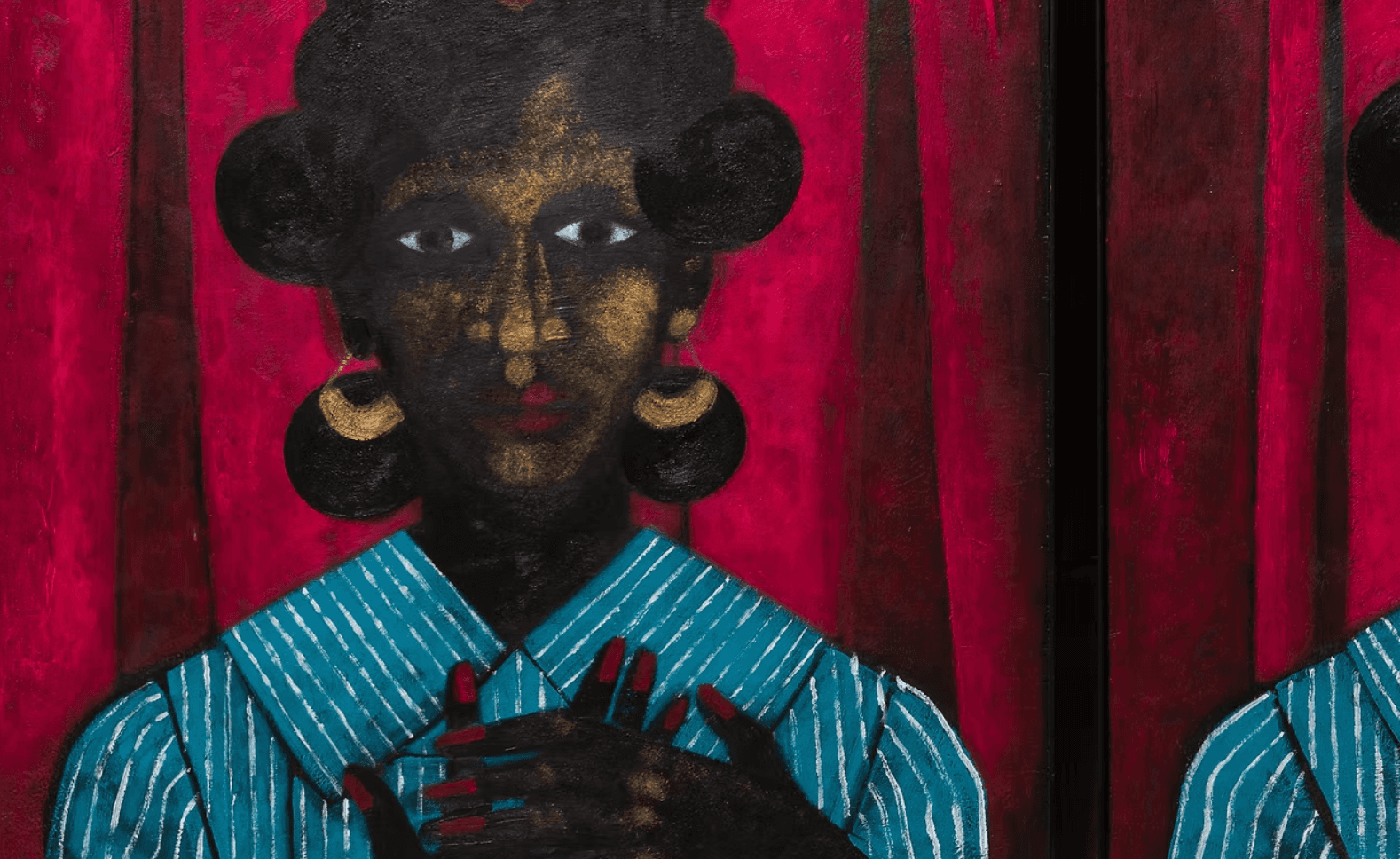
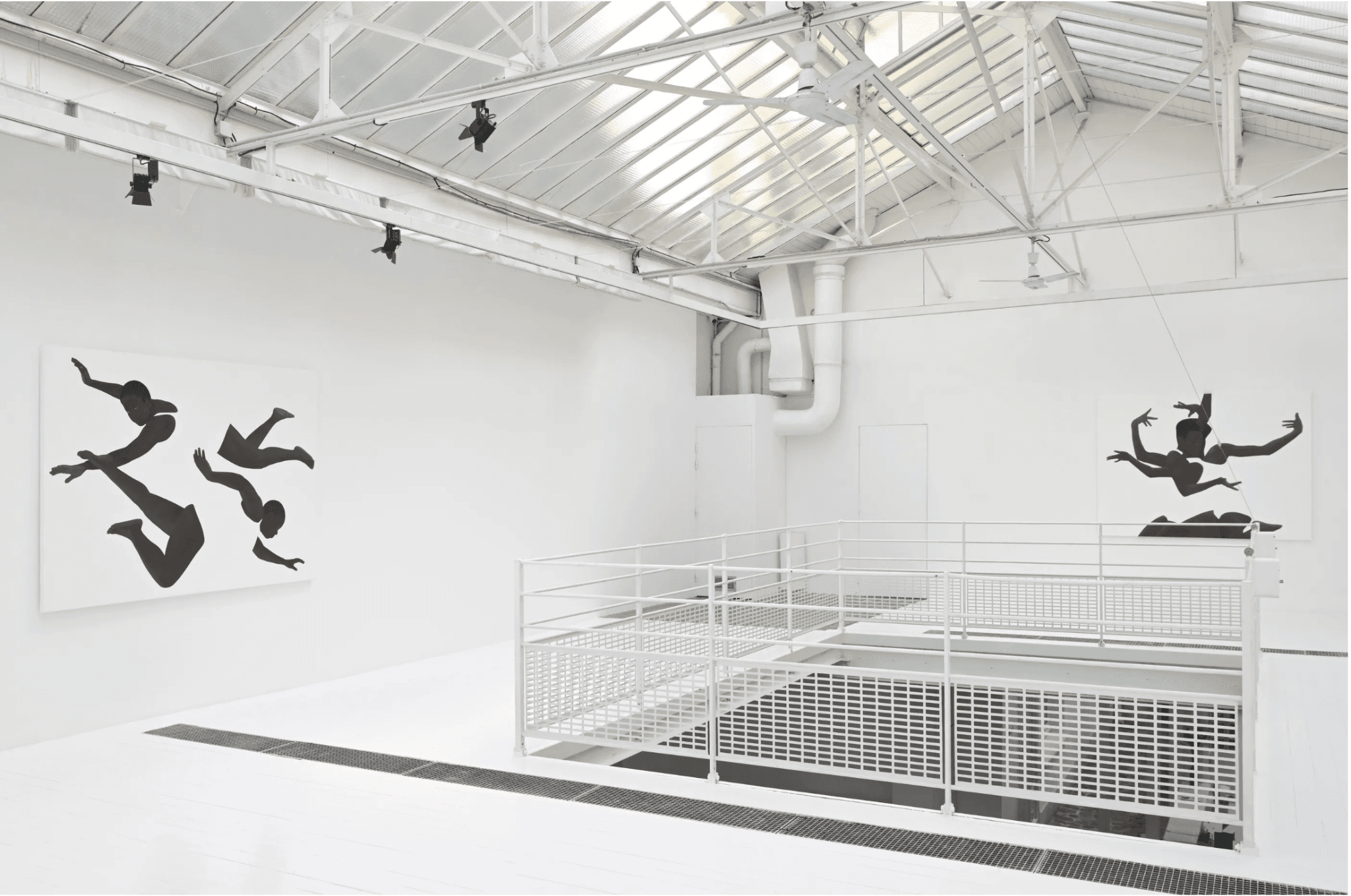
For her first solo exhibition in France, the Tanzanian artist presents new works centred on figures rendered in a pared-back palette of browns and blacks against conspicuously white backgrounds. “They’re in a free space where they don’t have to conform to anything and where there are no limits,” Mlengeya has said. Conceived in the wake of her mother’s death, Earth and Sky turns negative space into a field of memory and projection — a meditation on movement, inheritance and the continuity of existence across generations. In paintings such as Unbound and From below, the figures seem to detach from the canvas and float free of context, caught between putting down roots and breaking free of them, while their eyes — sincere and relaxed — become focal points. Against the gallery’s white walls, that suspension extends beyond individual canvases, making the figures appear almost to drift through the architecture itself.
5 September – 24 October 2026.
Ladji Diaby, Godspeed You Black Emperor
Galerie Crèvecœur, Paris · By Nana Poulot
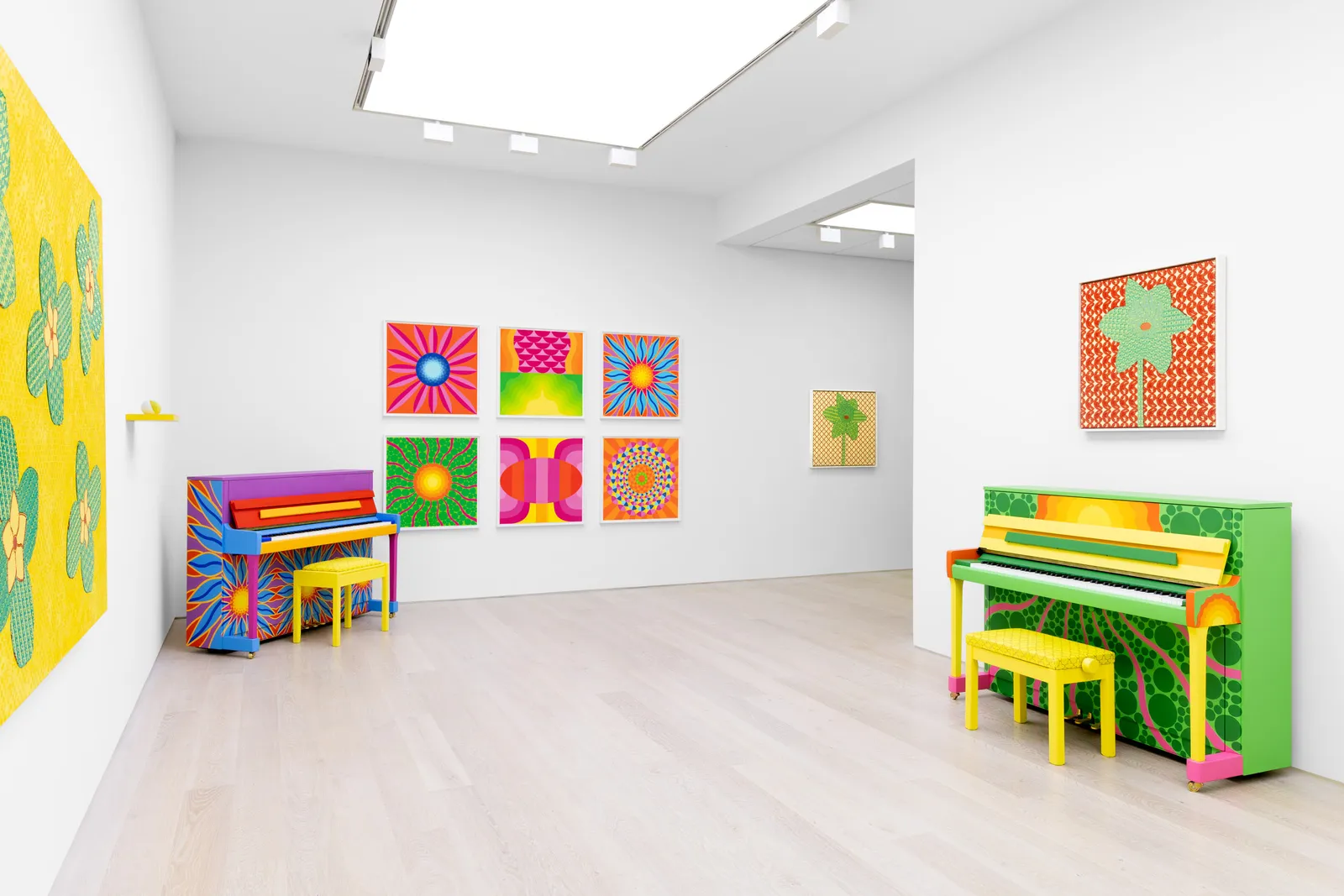
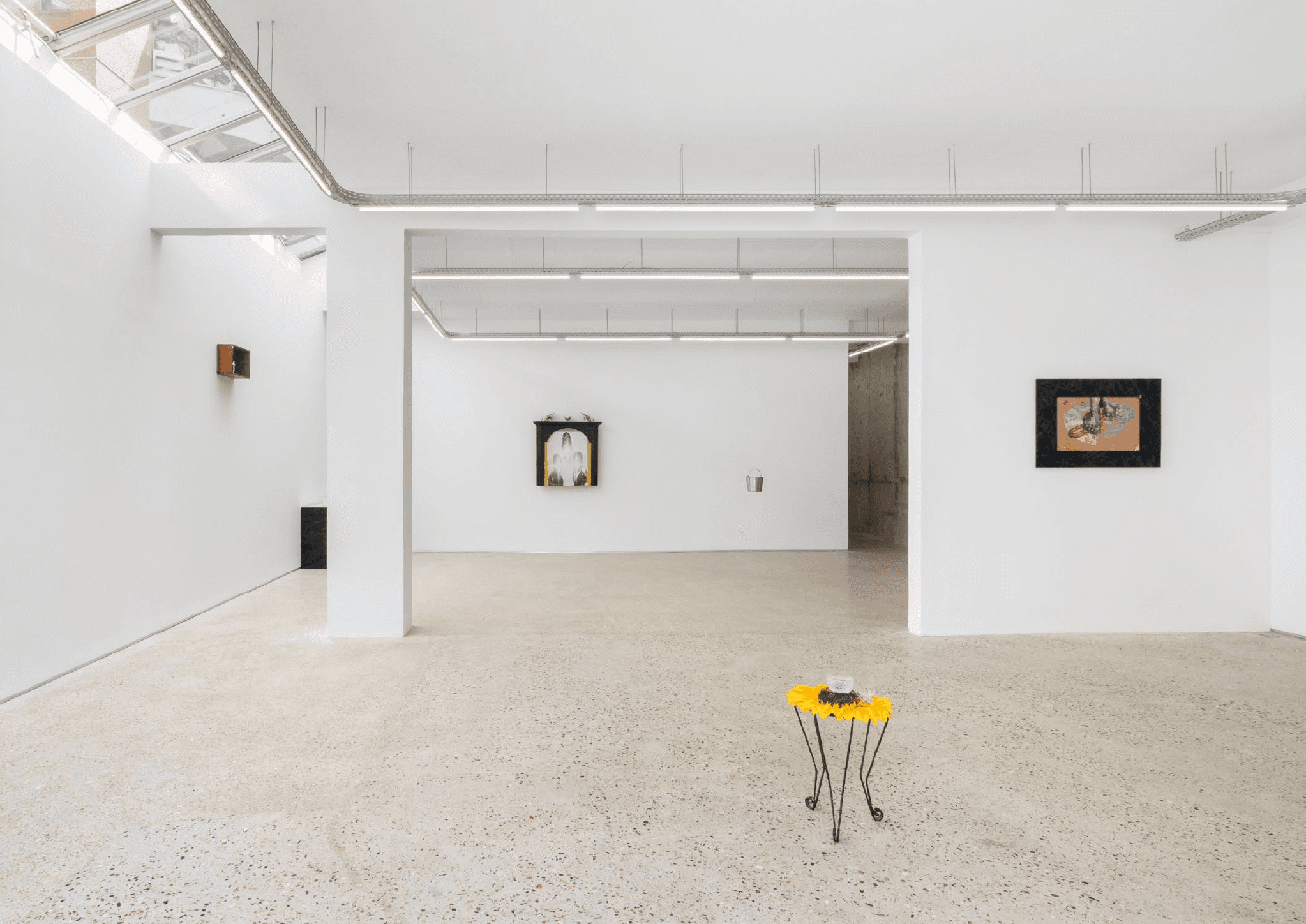
Central to Ladji Diaby’s art is a merger of memory and everyday life, and a penchant for found artefacts. In Godspeed You Black Emperor, model cars, toy robots, a mirrored cabinet, gilded bird ornaments and a pharaoh-shaped lamp appear among flea-market furniture and domestic fixtures in Crèvecœur’s pristine white rooms. These everyday things stand in for people — talismans and carriers of memory — but they also test the systems of value through which objects, identities and histories are assigned worth. Across cupboards, a bed and sweet jars, domestic intimacy becomes material; Diaby diverts objects from their supposedly initial functions and gives them another life. The gallery becomes something between a child’s room, a flea market and a ritual stage. An alchemist bent on turning lead into gold, Diaby makes the sacred and mundane collide without erasing the previous lives of the things he has found.
11 September – 28 November 2026.
Crosscurrents and Affinities
DADA Gallery, Lagos · By Adeoluwa Oluwajoba
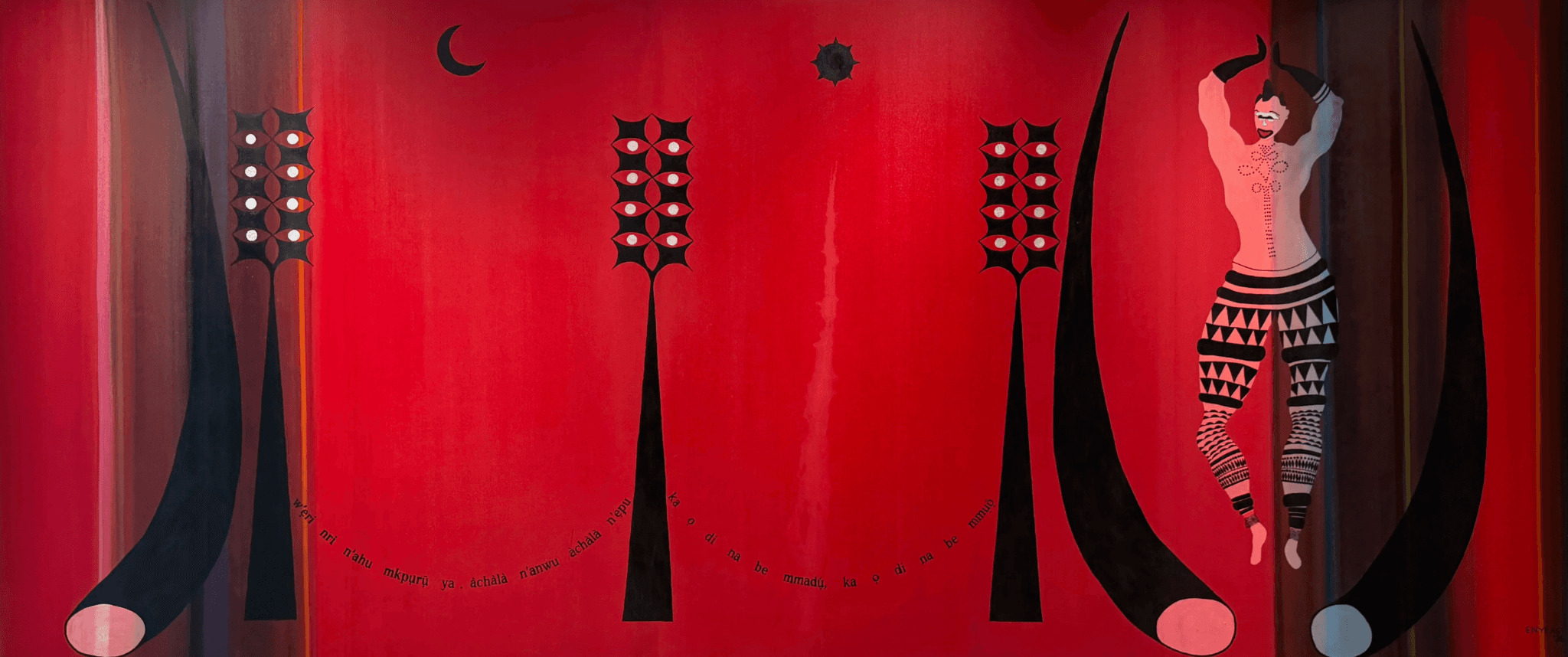
The group exhibition Crosscurrents and Affinities is imagined as an enquiry into relation: between convergent themes and diverse stylistic approaches, across generations and through kinship in practice. Presenting seven artists, from established figures to emerging talents, it considers some of the tensions and correspondences that have animated the Nigerian artistic landscape. Nondescript bodies in public space exist alongside detailed scenes of interiority and repose; luminous, airy figures find themselves in communion with intricately patterned forms and landscapes. Where one thing says something, another remarks in response. Kadara Enyeasi’s large-scale Requiem/I come, dancing into your dream sets up that conversation across from Kainebi Osahenye’s expressionist canvases. Similar in experimental and conceptual approach yet distinct in execution, the two establish the tension through which the exhibition is read. Enyeasi works with clean lines and defined boundaries between forms; Osahenye’s canvases have an explosive quality, their elements blurring and crashing into one another in disquieting harmony. The contrast continues between the monochromatic palettes of Chigozie Obi and Kelechi Chinwendu and Nike Davies-Okundaye’s vivid canvases; between Abiodun Olaku’s solemn nightscapes and Ayotunde Ojo’s pastel explorations of interior life. That friction between affinity and difference is where the exhibition finds its strength.
13 September – 31 October 2026.
The Weight of Traces
SOTO Gallery, Lagos · By Sabo Kpade
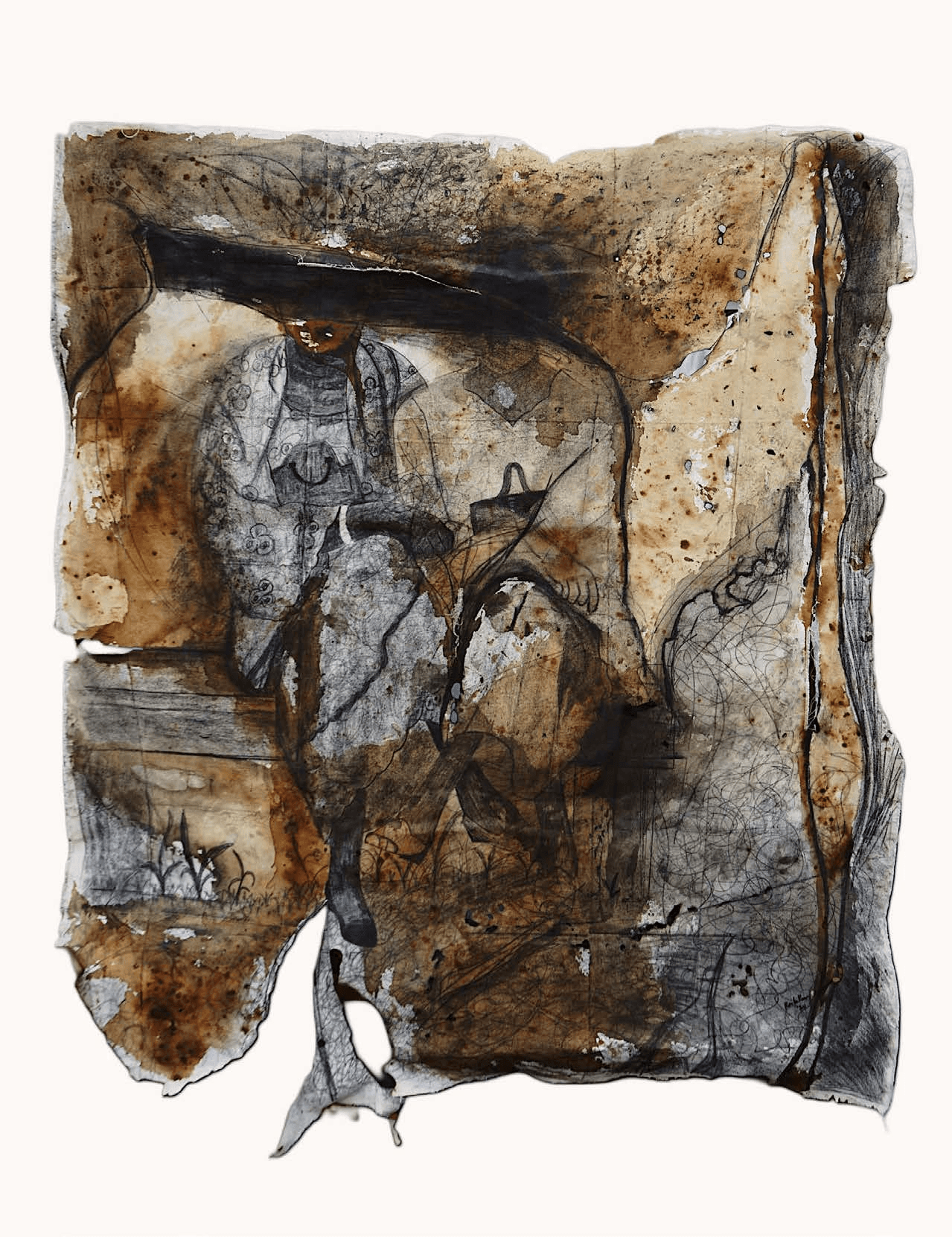
In The Weight of Traces, a trace is not simply a memory. It is what remains after something has happened, and it is stubbornly material. Freed from conventional framing, Ronke Komos’s Kori-kosun, 5&6 era (2024) hangs like cloth. Two poised seated figures emerge through the jaga-jaga of mark-making, pigment and burning across its surface. Lola Mariam Alli’s work, by contrast, is the most painterly and least dependent on drawing. Odama Paulcy’s earth-pigment works recall ancient scrolls, reliefs or theatrical diagrams populated by spectral figures. Humans and math (2026) is the strongest: architecture like a stage or amphitheatre, white chalk figures — social or mythic — and the instruction “find X.” Oluchi Anaghoba partitions the picture plane into colour fields, embedded portraits and lower registers of photography, silkscreen and collage. Here the trace becomes information: an image surviving suppression. The exhibition is weakened by its unexplained claim to the “ethnographic possibilities of painting,” and the quartet never quite develops into an argument about gender. Its stronger proposition is material: four artists testing different ways information survives. That tougher proposition is what gives the show its real coherence.
Through 10 October 2026.
more stories


![Gabriel Selassie Tsagli, Rave, 2026. [wall colour and oil on canvas, 240 x 360 cm] Courtesy the artist and Gallery 1957.](https://framerusercontent.com/images/GB4ZGt77CZIaYOGRvACPSKx3rd0.png?width=631&height=404)