What's On
3 Things to See in Lagos This Week
Stephen Tayo finds social choreography in the movements around worship, Ameh Egwuh builds a language from yellow bodies and white birds, and Ngozi-Omeje Ezema discovers what a vessel can hold after it breaks.
SHARE
3 Mins Read

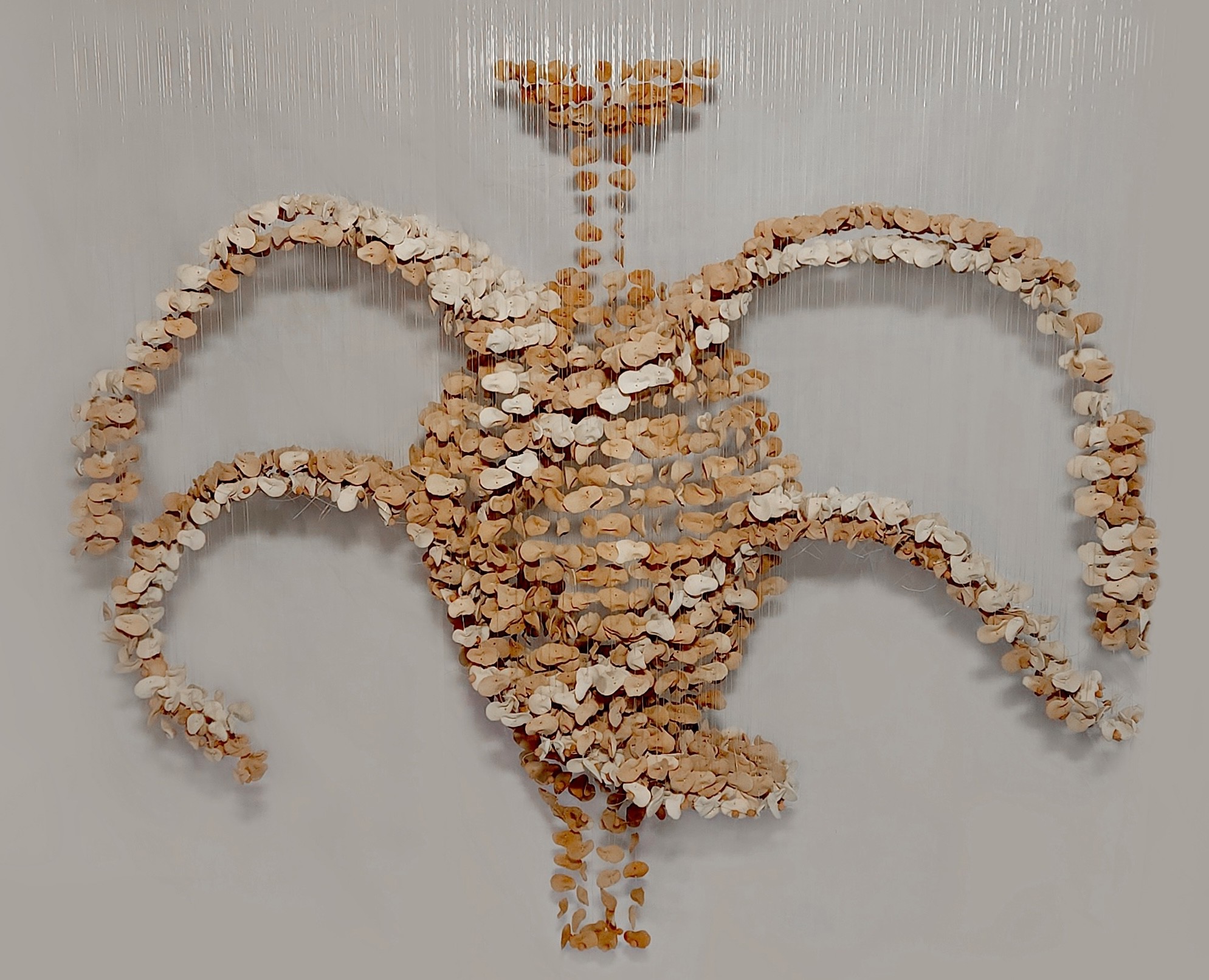
Ngozi-Omeje Ezema, Condition Make Crayfish Bend
kó, Ikoyi · Through 22 August 2026
Five years after Boundless Vases, her previous exhibition at the same gallery, the Nsukka-based artist’s suspended, rounded vessel-like forms have given way to partial, flattened ones. In Condition Make Crayfish Bend, Ezema has hardly abandoned the suspended vessels that look, to some, like outdoor stalactites. The title is echoed in these half forms. Depending on the angle from which you catch them, the ceiling light catches the plastic threads and makes them glimmer, and this adds to the perception of clay going celestial. Whether necessary to its construction or intended to show the support, the suspension mechanism is made conspicuous by the large rectangular frame overhead. A visible chain of dependence is created by the vertical filaments, the slender connective neck and the large body below, in which no constituent part is self-supporting. The minuscule holds the monumental: imposing bodies held aloft by apparently fragile construction. That Ezema sources her clay from mines in Enugu gives the work’s origin story more heft. The provenance resonates in a city whose modern growth was shaped by colonial coal extraction and the railways built to transport it. The work presents in the gallery as meditative, requiring slow looking.
Stephen Tayo, What Comes to Mind When You See the Garment?
ALÁRA, Victoria Island · Presented by FF Projects · Through 20 September
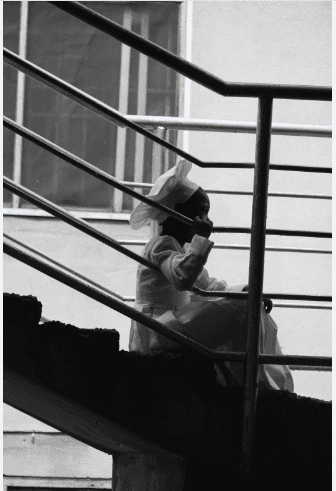
Tayo is a formalist in the service of people. In his new show at Alára, his subject is religiosity as practised by Aladura Christians, whose adherents are readily identified by long white robes and bare feet. Tayo’s deeper interest lies less in the faith’s syncretic elements than in its social choreography, in church and in public. He routinely uses abstract or geometric assemblies to frame and deepen the field of vision around his subject. In Ibadan 11 (2022–ongoing), a little girl in robe and hat is captured sitting on a staircase, in profile. Is she resting? Or taking a genuine break from religious observation, or simply waiting for her parents? It’s poignant without needing to be profound. Behind her, a handrail traces the same logic as her gaze—arriving from the left, settling at the centre, then turning at a right angle into the stairs themselves—so that her white robe, cutting through the frame, continues the line of the window ledge beside it. Through it all, Tayo is more interested in people than the edifice itself: how they walk, talk, possess themselves, when caught in quiet or unaware moments. There’s more care, less curiosity, and more intuition.
Ameh Egwuh, Yellow
Rele, Lagos · Opened 25 July · No closing date announced
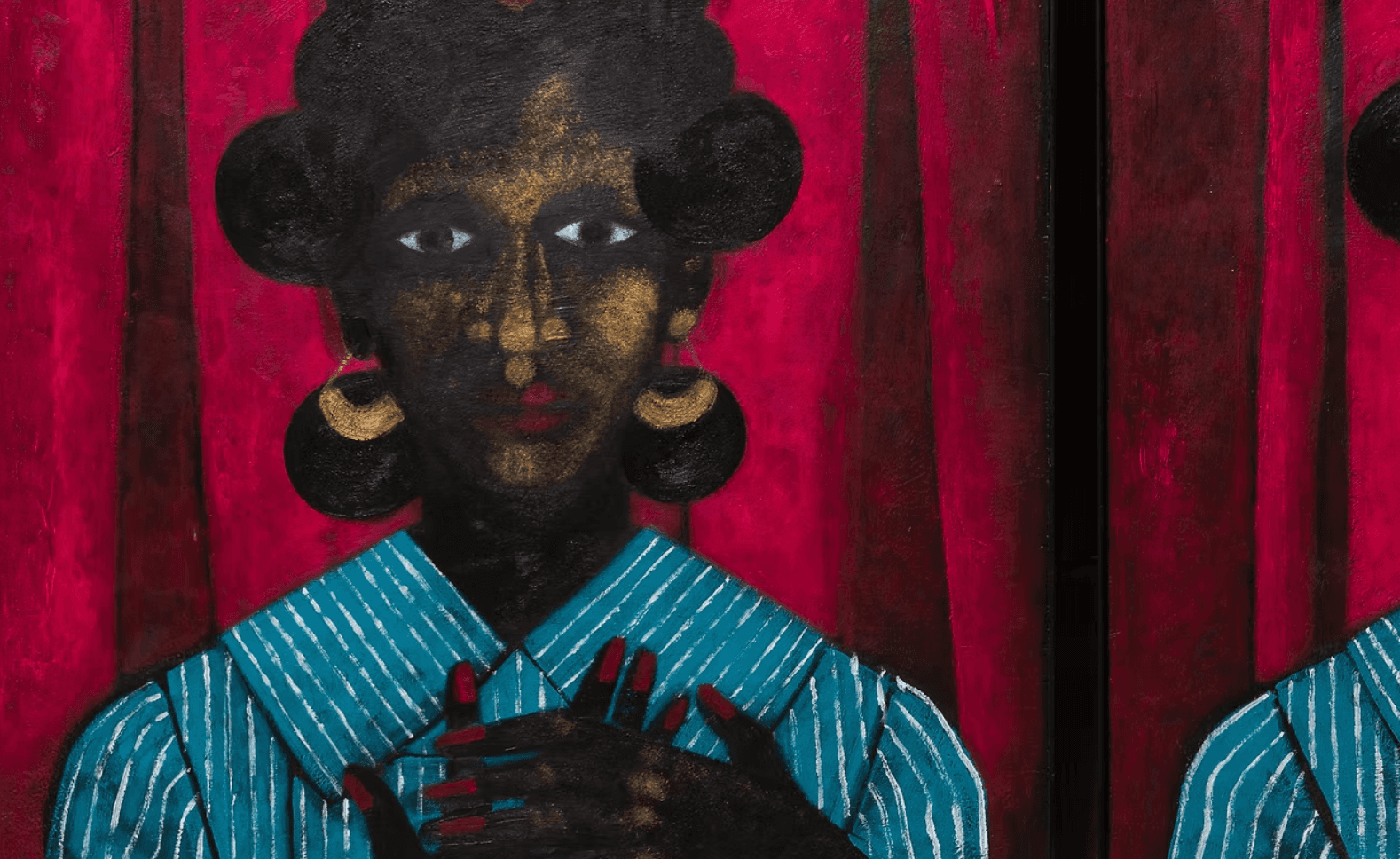
A knowledge of synesthesia is not needed to comprehend Yellow, Ameh Egwuh’s current show at Rele, Lagos. So alluring is the colour, and Egwuh’s deployment of it, that it took this viewer some minutes to realise the show’s macabre nature. In one diptych, the eye is drawn to the yellow field of which the figure is composed, to his athletic physique and posture. Only after this pleasure does the eye move down to the machete in his hand, and further down, to the severed head on the floor, his leg standing over one of the victims. If Egwuh appears to be juxtaposing beauty and death in the small plant and bone paintings, it becomes clearer that he is sequencing them. Green plants over a white background occupy the top section, while the lower is a cross-section of dark teal with skeletons laid where one would, in such diagrams, find roots. Not contrast but dependence: the perished nourish the living. In both sets of works, the eye travels the same route from body to machete to severed head, leaf to stem to bone. Death is encountered in Yellow, but only after passing through beauty.
more stories
What's On
In Lagos, Victoria Ndubuisi and Paulcy Odama turn bodies into landscape and monumental architecture into something fragile. In Abuja, Dotun Popoola bends discarded metal until it holds movement and likeness. In Paris, four decades of Kerry James Marshall place Black figures at the centre of history painting. Three shows about what a surface can be made to carry.
3 Mins Read

What's On
A Tanzanian painter turns white space into a field of memory; a Paris gallery fills with flea-market talismans. In Lagos, one group show tests affinities across generations while another asks how traces survive in material form. Four exhibitions worth seeing this week.
4 Mins Read

What's On
From Ruth Ige and Chika Idu in Lagos to Barthélémy Toguo and Ladji Diaby in Paris, the exhibitions worth making time for now.
5 Mins Read

What's On
This week: grief and inheritance in Lagos, material memory and belonging in Paris, and Ndidi Dike’s economies of extraction in Stockholm.
4 Mins Read

What's On
At Nubuke Foundation domestic objects turn into archives of labour and belonging, Gabriel Selassie Tsagli sets the choreography of the rave against private grief and Frank Coffie makes yarn do two entirely different jobs in one room.
3 Mins Read
![Gabriel Selassie Tsagli, Rave, 2026. [wall colour and oil on canvas, 240 x 360 cm] Courtesy the artist and Gallery 1957.](https://framerusercontent.com/images/GB4ZGt77CZIaYOGRvACPSKx3rd0.png?width=631&height=404)
What's On
For nearly a decade, Yinka Ilori has been known as an artist of colour and community — the designer behind playful, technicolour public interventions across London and beyond.
5 Mins Read
What's On
From London to Lagos, New York to the French Riviera, African and diasporic artists are commanding some of the most talked-about gallery walls this summer. Here's where to go, who to see, and what to expect before the doors close.
3 mins

What's On
Two Galleries, Four Decades, One Artist Running Out of Time to See in Lagos
4 mins

What's On
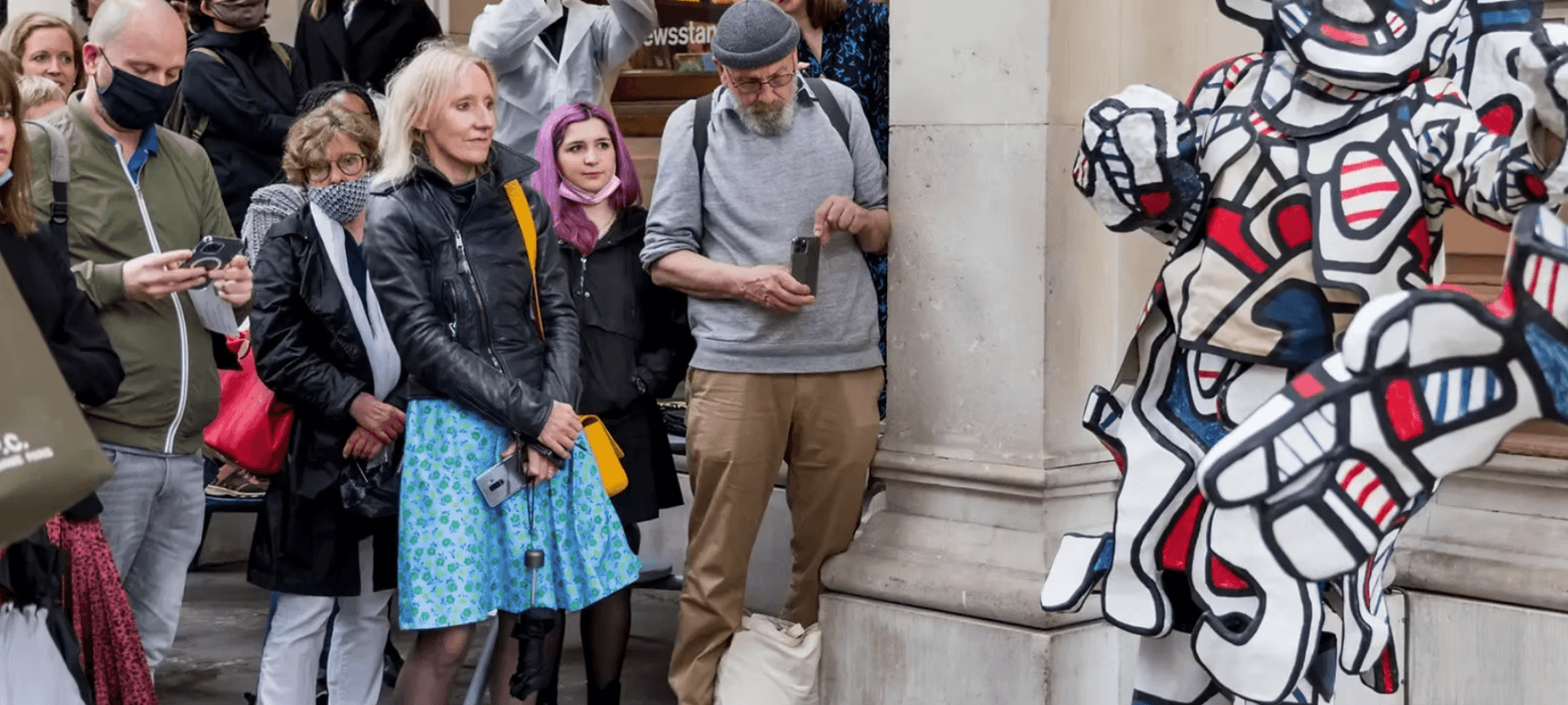
London Gallery Weekend returns for its sixth edition this 5–7 June, bringing together over 120 galleries across the capital for three days of exhibitions, talks, and events — all free and open to the public. For its Co-Directors Jeremy Epstein and Sarah Rustin, the 2026 edition is "a convening moment that is both local and global in its scope and audience, reflecting the year-on-year revitalisation and evolution of the capital's contemporary art scene."
4 Mins Read
What's On
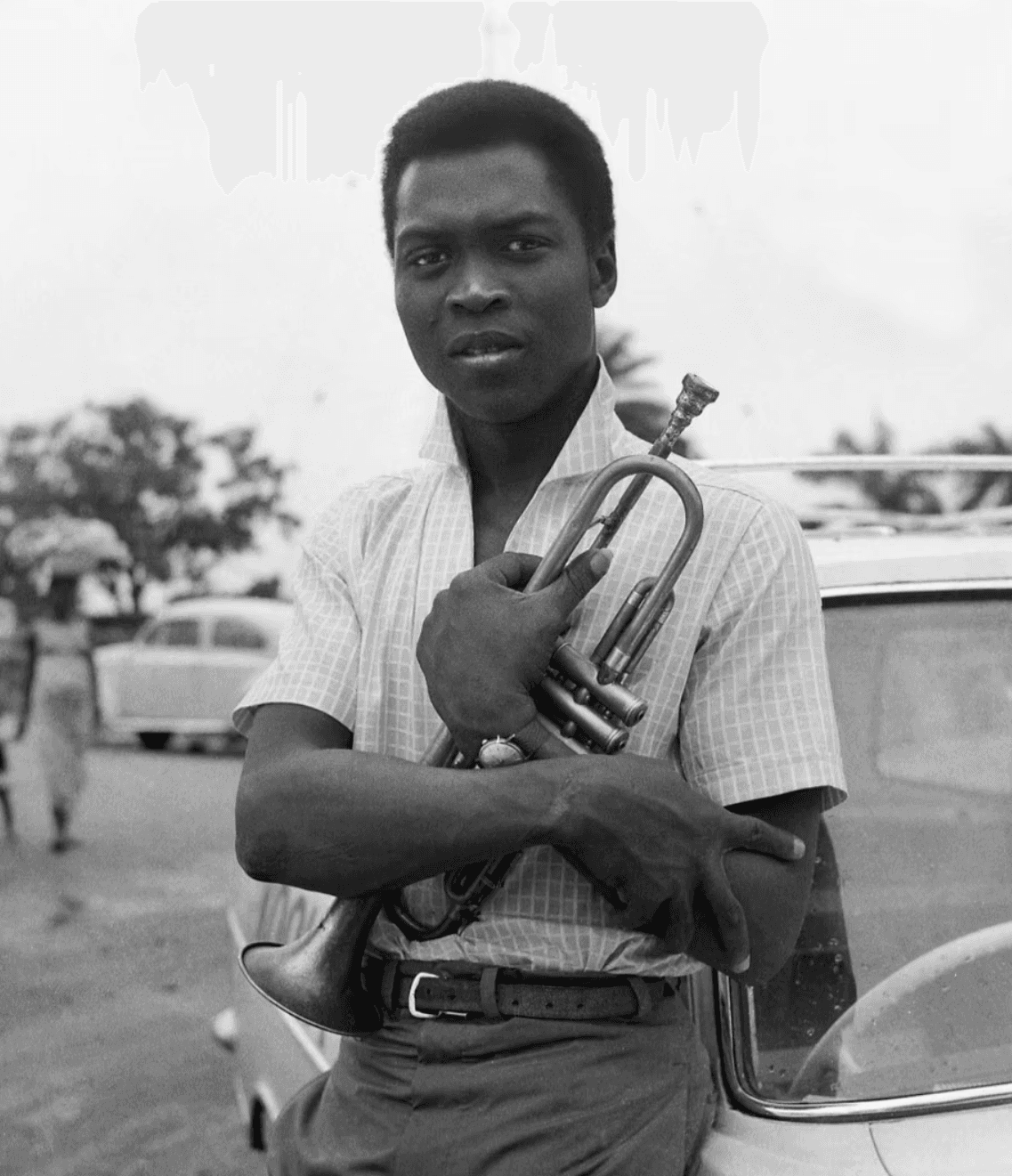
On October 12, 2025, the Ecobank Pan African Centre in Lagos opens its doors to Fela Kuti: Afrobeat Rebellion, marking the return of an exhibition that celebrates one of Africa’s most influential cultural figures. Originally curated by the Philharmonie de Paris in 2022, the exhibition is now reimagined for its Nigerian debut by the A Whitespace Creative Arts (AWCA) Foundation, with support from the French Embassy in Nigeria and the Kuti family.
2 Mins Read
What's On
The Nigerian art landscape welcomed a major new institution with the launch of ADEGBOLA Gallery in Victoria Island, Lagos. Founded by lawyer and cultural entrepreneur Kayode Adegbola, the gallery officially opened its doors on October 1, 2025, Nigeria's Independence Day. The space has been established with the ambition of creating a new home for serious curatorial work that is deeply anchored in local context while maintaining global relevance.
2 Mins Read

What's On
A groundbreaking exhibition explores photography’s role in shaping Pan-African identity, solidarity, and political thought The Museum of Modern Art (MoMA) has announced a landmark exhibition titled Ideas of Africa: Portraiture and Political Imagination, opening December 14, 2025, and running through July 25, 2026.
3 Mins Read

What's On
Southern Guild is set to make its third consecutive appearance at The Armory Show, presenting a powerful new body of work at Booth 117 of the Javits Center. The presentation, on view during the VIP Preview on September 4 and to the public from September 5–7, will feature new paintings, sculpture, and photography from a roster of seminal artists from South Africa, Morocco, Benin, and Nigeria.
2 Mins Read

What's On
Victoria Ndubuisi’s distinctive approach to painting captures attention in a remarkable way. In her ongoing solo exhibition titled "Ọmụgwo," she employs a unique marbling technique for the backgrounds of her artworks, created through the dynamic act of performance.
3 Mins Read

What's On
O’DA Art is pleased to present, Walk like a Champion, Abe Odedina’s first solo exhibition in Lagos, Nigeria. This new body of work is a testament to this special gathering and the thrilling opportunity to finally exhibit in Nigeria again and most importantly, to make a show for his Mother ahead of the centenary of her birth. Its title, that Odedina attests, ‘is not about swagger. It’s not about strutting around. It’s about what you think a champion is? It’s about being undeniably true to yourself. When we say “walk”, it’s in a more important sense than one foot in front of the other. It’s how you go through life. It’s the Big Walk.’
2 Mins Read