Editorials
Armory Show: 5 Works to See Up Close
Thread that turns into faces, bronze that becomes a crowd, ceramic coral clinging to a sunken object, a "painting" that turns out to be a quilt: the Nigerian artist Jacqueline Suowari takes us on a tour of the fair at the Javits Center in New York, pointing out the five works that rewarded her for stepping closer.
SHARE

8 mins
1. Lisu Vega
GLADWELL PROJECTS · PLATFORM SECTION
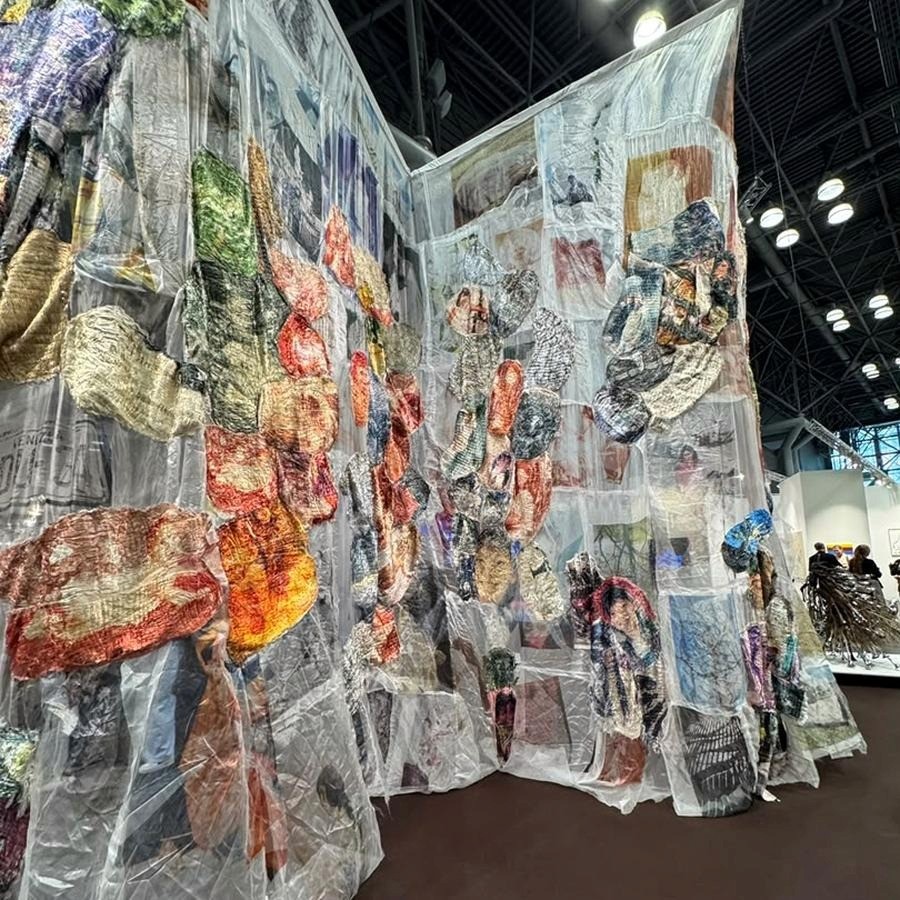
Photographs don’t do Lisu Vega’s work justice. They cannot convey how imposing the installation is, or how its forms play against one another. As I entered the fair, I first saw something that reminded me, as a Nigerian woman, of the Cladini collage boubous we used to wear. Up close, it became a textile hanging, and I began to see and appreciate its intricacies. What looked like coloured maps turned out to be images of faces made from clusters of thread sewn together.
That gave mark-making a whole new meaning for me. I had always thought of it in terms of drawing with a pen or marker, or carving a line into wood or a hard surface with a sharp object. Here, thread is the medium that makes the marks. The work also brings together screen printing and photographic transfer. These techniques speak to one another so easily that nothing feels out of place: a fluent visual language.
The faces are more impressionistic than realistic. From a distance, they resolve into faces; up close, they come apart into individual threads. I’m used to seeing tapestry described through either precise weaving or abstraction, so it was striking to encounter this impressionistic use of thread.
2. Dominique Zinkpè
SOUTHERN GUILD
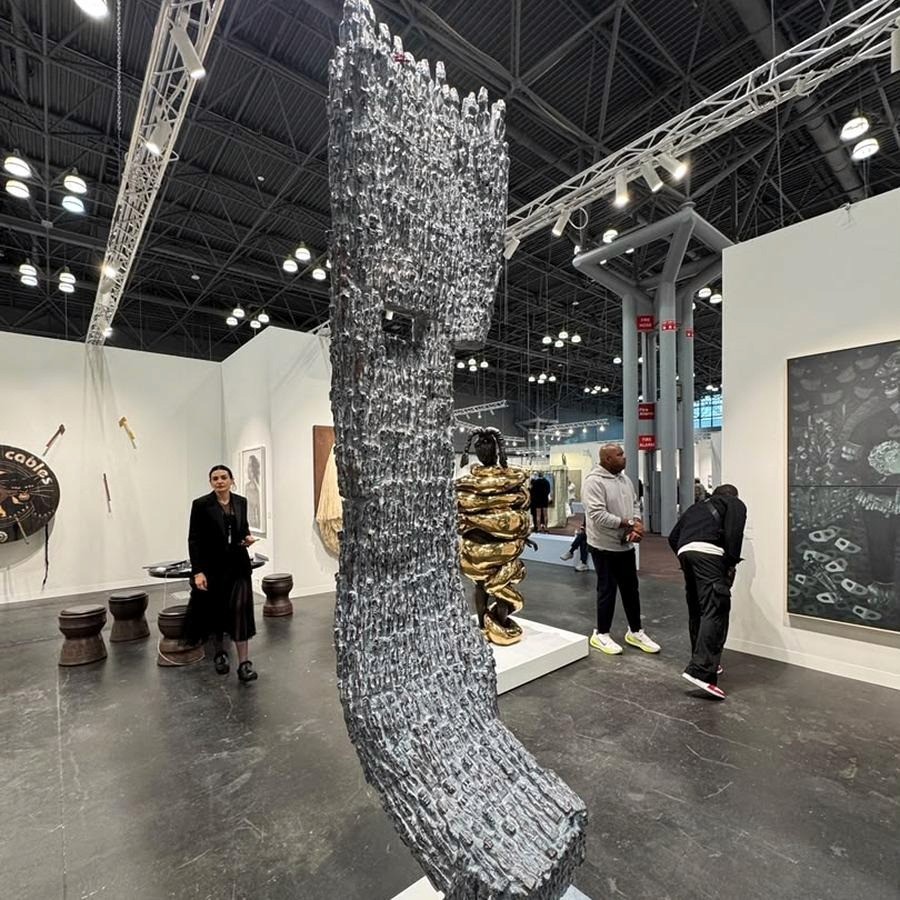
This was my first time encountering a Dominique Zinkpè sculpture in person. I learned about him early in my career and have continued to hear about his sculpture and installations ever since.
From a distance, the work looked like a solid organic mass. As I moved closer, I began to make out the carved figures. I couldn’t tell whether they were ibeji figures; the reference wasn’t explicit to me. [The figures draw on Yoruba ibeji twin figures, each carved in wood before casting. — Ed.] What caught my attention was the way the figures were clustered together to form the larger image. As an artist, I found the skill humbling. I could imagine how much work went into making it.
I haven’t seen another sculpture quite like it at this fair. I have long respected Zinkpè, and I did wonder whether that shaped my response to, and fascination with, the piece. But standing in front of the work, whether biased or not, I felt that my admiration was earned.
3. Lauren Shapiro
GAVLAK
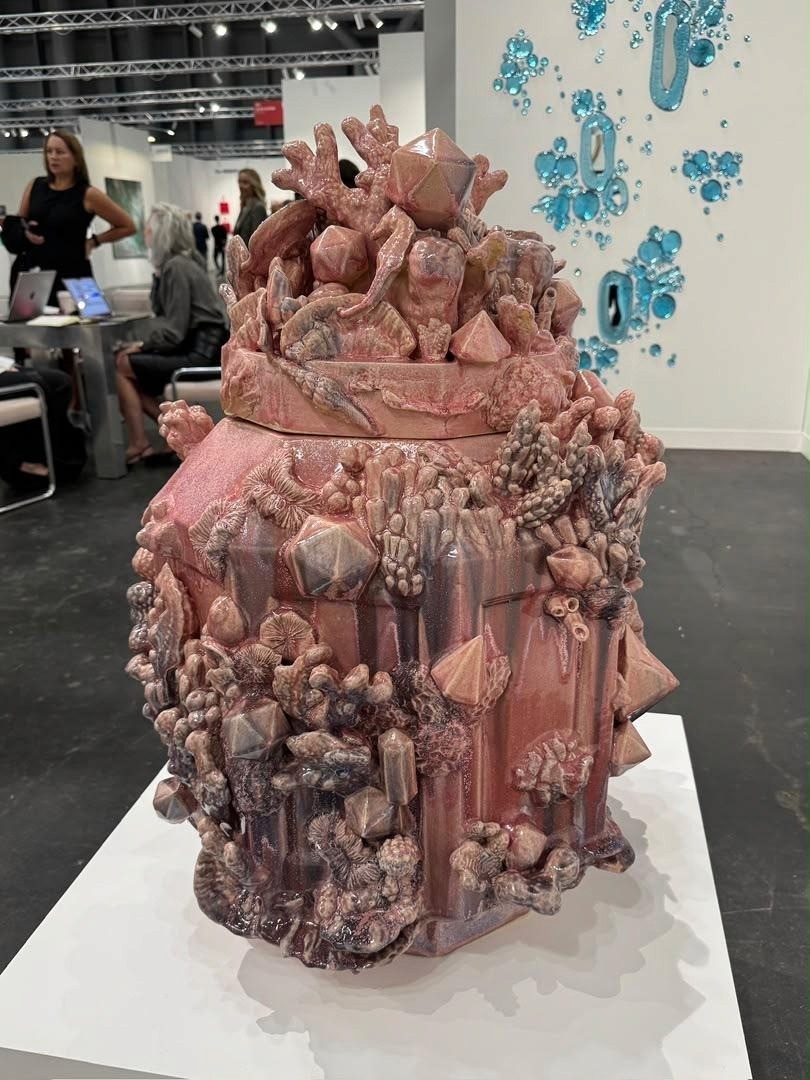
I was walking past the booth when I saw something that looked as if it belonged underwater, and I went back to it. I have an unravelling relationship with water: I can’t swim, and I’ve always been intimidated by the ocean. But I’ve always been curious about the life beneath the surface: corals, little seahorses, starfish, things I’ve never seen in real life. Lauren Shapiro’s piece let me feel I was in front of something real.
She isn’t trying to be hyper-realistic. The ceramic tells you just enough to register the creatures’ presence without telling you everything. And they are latching onto a man-made object that has sunk into the water, perhaps from a shipwreck, perhaps dumped. You find yourself asking whether the organisms are growing from the object or around it. An alien object that might have been pollution has become a home.
The gallerist told me that Shapiro scuba dives, photographs the reefs herself and then makes 3D scans. Anyone could have settled for other people’s photographs of marine life. That she goes down herself changes how I feel about the work: she has entered the environment that intimidates me and brought something of it back through her own observation. For me, that makes the piece feel like a first-hand translation of the underwater world.
4. Desmond Beach
RICHARD BEAVERS GALLERY
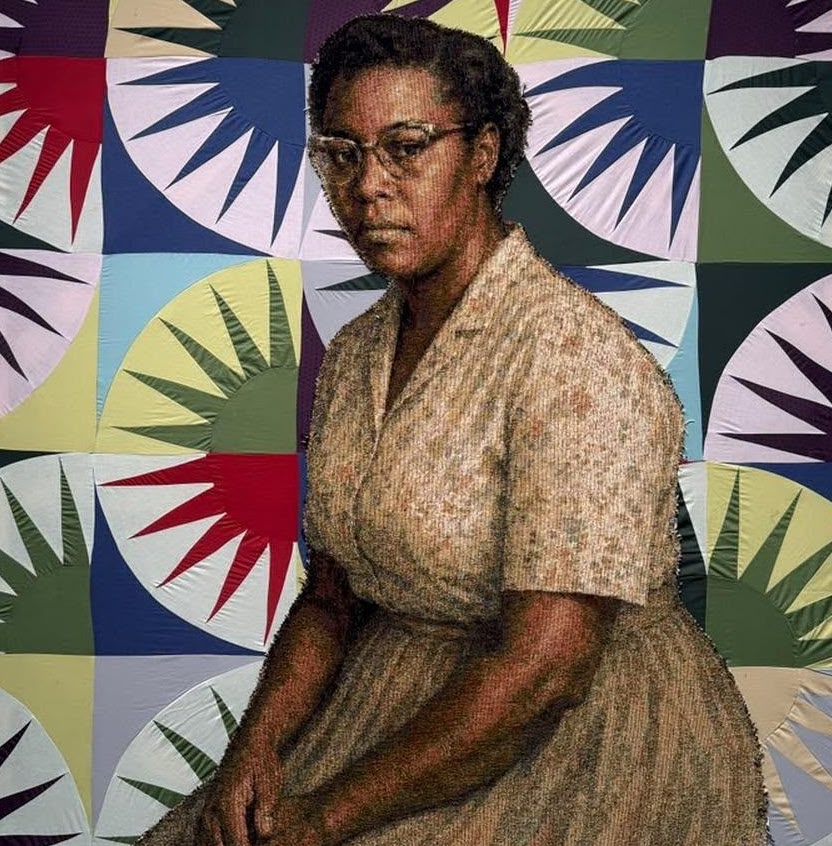
At first glance I took Desmond Beach’s work for a painting, a series of Black women. Up close, I was stunned to find it was quilted. It isn’t only quilting; there’s weaving too, with the figures woven onto a quilted ground. I couldn’t tell whether they were made separately and attached, but however it was done, it’s seamless.
As a figurative painter, I always appreciate figurative work that shows a command and mastery of form. I loved that he references archival photographs from post-slavery America, and that he is upholding a tradition passed down to him from his grandmother. The family and heritage woven into every piece felt authentic to me.
When we think of Black experience after slavery, most of what we picture is painful. Somehow he has turned those experiences into beautiful images. I believe he says as much himself, and I would say he has succeeded.
5. Austin Uzor
TANYA WEDDEMIRE GALLERY · WITH O’NEIL SCOTT
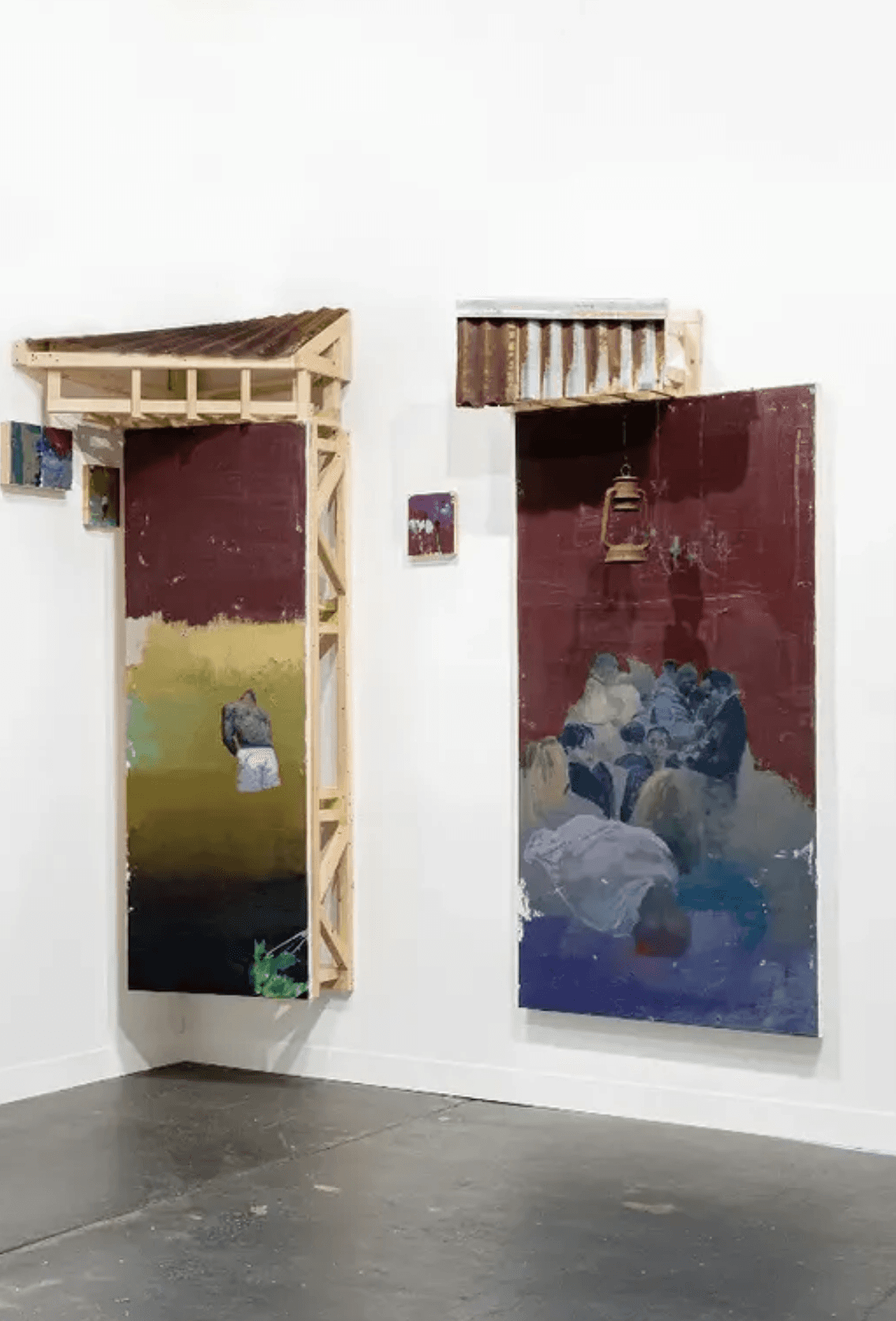
What struck me first about Austin Uzor’s work was its combination of painting, installation and objects I assumed he had found. I asked him whether the zinc roofing and lantern were found objects. He said they weren’t. He told me he prefers to buy the materials and rust them himself because found objects carry histories of their own. By altering the materials, he can give them a place in the story he wants the work to tell.
The lantern and rusted roof felt familiar to me. As a Nigerian, I thought of the zinc sheds I saw at the kiosks in the marketplaces growing up, and the lanterns we used at home. Seeing elements that resonated so strongly with my childhood gave the work that whole nostalgic feel.
Uzor has connected memories of Nigeria with his life in America, and that sense of looking across places and times came through in the paintings. They are like somewhere in a dream, or a trance: you’re dreaming, or you’re remembering. Dreams are always a morph of something from the past, the present and the future, and somehow he has captured that feeling. I really resonated with that.
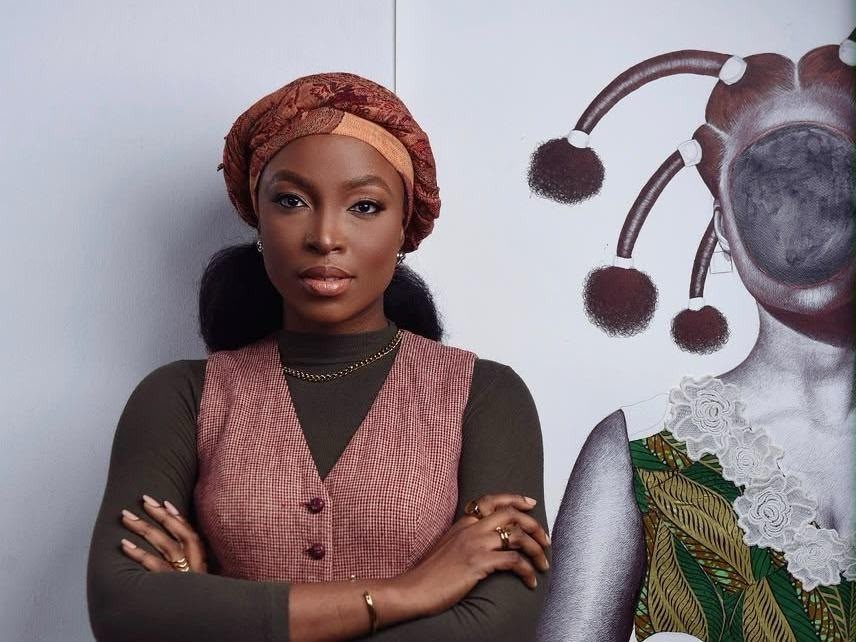
One thing you can see recurring in my selection is my appreciation for the use of materials by all the individual artists, and how they’ve been able to translate personal experiences, memory and nostalgia into these materials. That’s something I really respect.
The Armory Show 2026 Javits Center, New York, 24–27 September. thearmoryshow.com
more stories