
Editorials
Avoiding the Pitfalls: Six Common Mistakes Art Collectors Make—and How to Steer Clear
In the nuanced world of art collecting, the process is often as significant as the acquisition itself. Whether motivated by aesthetic appreciation, investment potential, or cultural enrichment, collectors must ensure that their decisions reflect both their personal values and long-term vision.
SHARE
3 Mins Read

Yet the sheer volume of artists, artworks, and ever-shifting market dynamics can make the journey overwhelming. Without careful navigation, even experienced collectors may encounter avoidable missteps. Below, we explore six of the most common pitfalls in art collecting—and offer strategies for building a more thoughtful, resilient collection.
1. Neglecting the Artist’s Narrative and Context
Every artwork carries a narrative—one that extends beyond its visual appeal. A lack of understanding about an artist’s background, influences, and thematic explorations can lead to a superficial purchase that may not stand the test of time.
"We advise collectors to do their homework," says Hollis Taggart, owner of the eponymous New York gallery. "Beyond aesthetics, they should ask: Do I understand the artist's journey? Do I grasp the significance of this piece within their body of work?"
Self-education is key. Engaging directly with artists at gallery openings, reviewing exhibition catalogues, and leveraging online resources such as gallery websites and Art Report Africa provide valuable context. A well-informed collector does not merely buy a painting—they acquire a story, a legacy, and a deeper connection to the artwork.
2. Chasing Trends Instead of Trusting Instinct
The art market is increasingly shaped by viral moments, auction headlines, and algorithm-driven hype. But aligning one’s collecting decisions with transient trends can lead to superficial or regrettable purchases.
“The best work for one collector is not necessarily the best for another,” notes art advisor Nazy Nazhand. True collecting begins with personal resonance.
Collectors are encouraged to cultivate their own visual literacy—by frequenting galleries, exploring underrepresented geographies, and deepening their understanding of both historical and contemporary art movements. For major acquisitions, working with an experienced advisor can help guide selections that marry aesthetic vision with financial foresight.
“Our goal is to help clients build legacy collections,” adds Nazhand, “not follow the noise, but invest in enduring value.”
3. Overlooking the Logistics of Display and Preservation
Art is meant to be lived with—but even passionate collectors can underestimate the practicalities of displaying and caring for their acquisitions. Scale, medium, and environmental conditions all matter.
“I once bought a massive Kylie Manning painting that doesn’t fit any wall in my apartment,” laughs collector Antonio Valverde. “But for me, collecting is also a dream for the future.”
Still, strategic foresight is essential. Fragile sculptures may be unsuitable for high-traffic areas. Unframed canvases, ceramics, and works on paper often require climate control or framing to prevent deterioration. Reputable galleries and dealers can help collectors anticipate these needs—whether through framing solutions or protective installation methods tailored to domestic settings.

4. Ignoring Provenance and Condition Reports
In a globalized art market, transparency around an artwork’s history is non-negotiable. Provenance not only verifies authenticity but also speaks to ethical ownership and long-term value.
“Provenance is particularly critical for works made before 1945,” advise Charly and Hanna Bailly of Bailly Gallery. “Collectors should always request documentation confirming the chain of ownership and authenticity.”
Condition reports are equally important, especially when purchasing remotely or at auction. The rise of online marketplaces has made long-distance acquisitions commonplace—but without physical inspection or expert evaluation, collectors risk acquiring compromised works. Whenever possible, viewing the piece in person remains best practice.
5. Making Impulsive Acquisitions
Art fairs, auctions, and gallery openings often create high-pressure environments designed to provoke urgency. While some opportunities are genuinely time-sensitive, rushing into a purchase can lead to regret.
Seasoned collectors know that patience is a virtue. They trust their instincts, take time to reflect, and seek expert counsel when needed. Over time, these habits foster the confidence to make informed decisions—even in high-stakes environments.
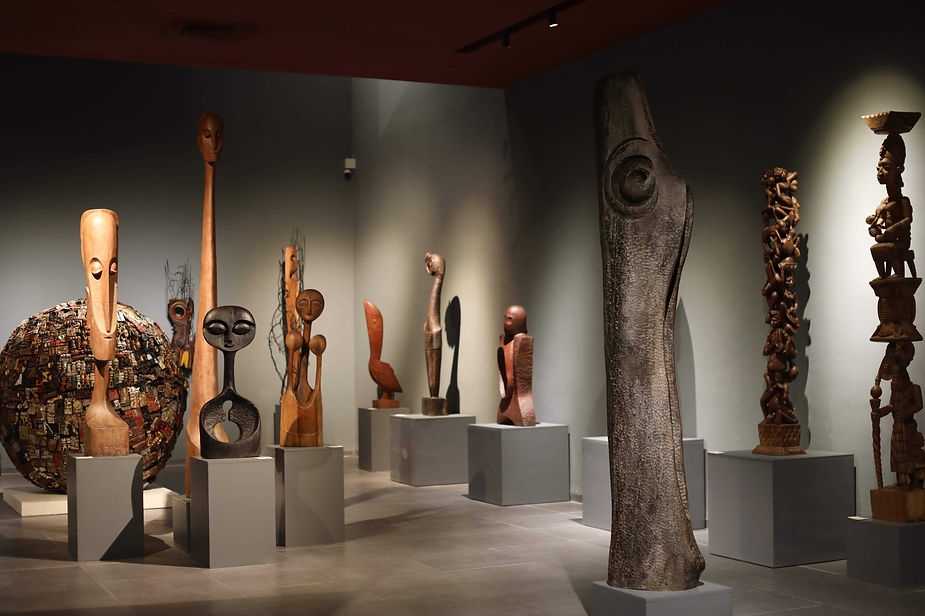
Yemis Shyllon Museum collection Credit: Yemisi Shyllon Museum
Art collecting is not a race for the most sought-after names or the trendiest acquisitions. It is a long-term commitment to curiosity, discernment, and emotional connection. The art world is a dynamic ecosystem where patience, ongoing education, and intuitive decision-making are invaluable.
Missteps are part of the journey, but so are the insights they offer. By approaching each acquisition with thoughtfulness, considering the artist’s narrative, resisting the pull of fleeting trends, anticipating practical considerations, and verifying both provenance and condition, collectors position themselves to build collections of lasting resonance.
In the end, the most impactful collections are forged at the intersection of passion and prudence, where every work acquired reflects both personal meaning and strategic intent.
more stories
Editorials
Thread that turns into faces, bronze that becomes a crowd, ceramic coral clinging to a sunken object, a "painting" that turns out to be a quilt: the Nigerian artist Jacqueline Suowari takes us on a tour of the fair at the Javits Center in New York, pointing out the five works that rewarded her for stepping closer.
8 Mins Read

Editorials
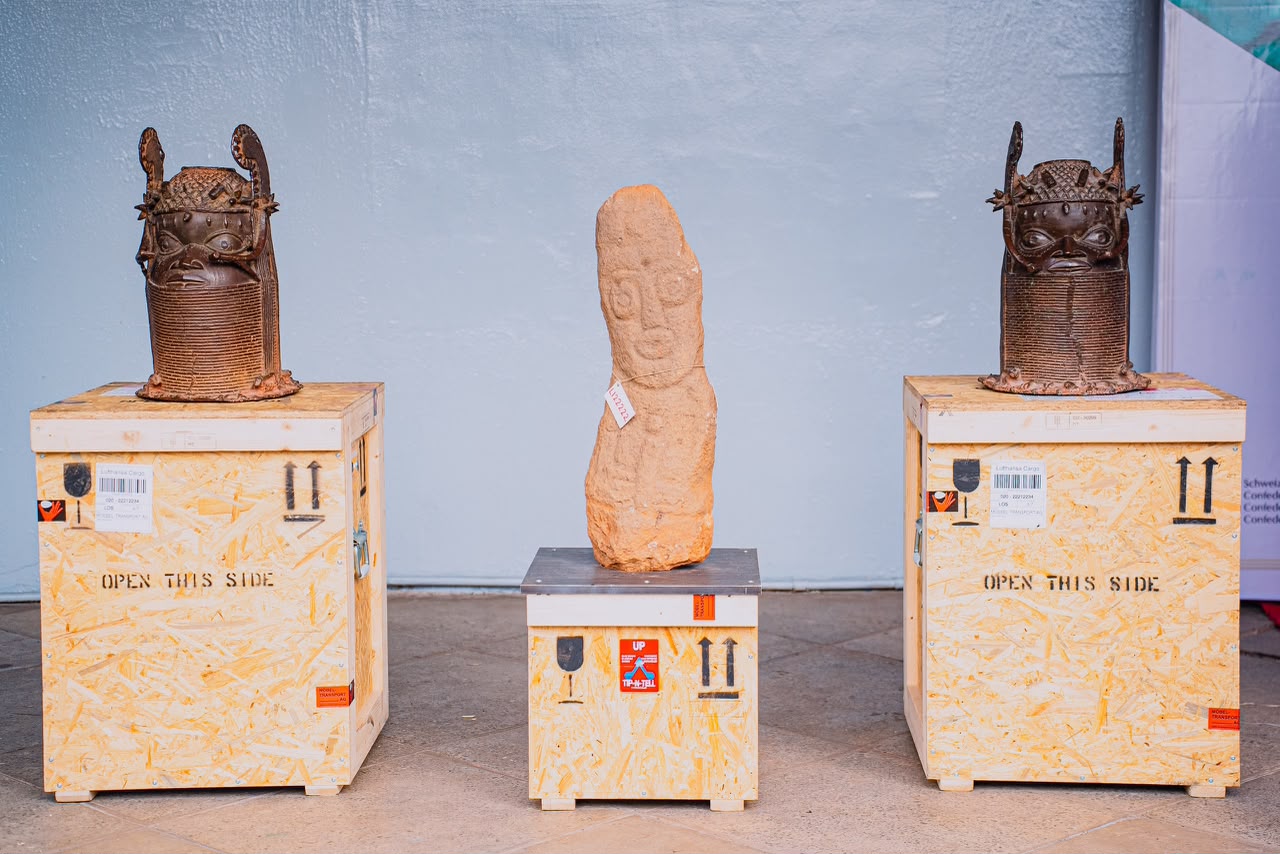
Switzerland's return of eighteen Benin Bronzes and four Ikom monoliths is a milestone in a restitution movement that is starting to outpace the institutions meant to receive it.
8 mins
Editorials
Dianna Offor, nicknamed "God's Artist," is a Nigerian-born visual artist, whose work is dedicated to expressing the essence of God and importance of faith in todays society. Currently living in Ireland–where she recently acquired a diploma in studio art painting, Offor has spent the last three years depicting the theme of Hope and Love through her biblical abstract paintings.
13 Mins Read

Editorials
Last week, Art Report Africa served as the official media partner for New Narratives and Singular Communication in Arts Journalism: The Museo del Prado Experience — a two-day international workshop held at the Yemisi Shyllon Museum of Art, Pan-Atlantic University, Lagos, organised in partnership with the Embassy of Spain in Nigeria and Casa África through its #PeriodismoÁfrica programme.
2 Mins Read

Editorials
On 14 June 2026, the Obama Presidential Center unveiled "The Obamas: Springing Forth" — a large-scale work by Njideka Akunyili Crosby, rendered in acrylic, coloured pencils, charcoal, and transfers on paper, measuring 108 by 120 inches. It now hangs in the Hope and Change Lobby of the museum's main building, free and open to the public, before the Centre's official grand opening on Juneteenth. It is the first official portrait of the former President and First Lady together.
3 Mins Read

Editorials
The 2026 Venice Biennale is, on paper, the most African edition in the exhibition's 131-year history. But what does that actually mean — and who does it serve?
5 Mins Read

Editorials
The Pavilion of Zimbabwe announces its participation in the 61st International Art Exhibition of La Biennale di Venezia, opening in April 2026 under the artistic direction of Adriano Pedrosa and the central exhibition In Minor Keys.
2 Mins Read

Editorials
There's a voice that lives inside us, often waiting in silence. It's a part of ourselves that we sometimes bury, a quiet shadow that only finds expression when we allow it to. Yusuff Aina's latest character, "Voied," is a compelling new light for this hidden self.
3 Mins Read

Editorials
In response to a growing chorus in the global art world declaring that “Black figuration is over,” O’DA Art Gallery’s latest exhibition, Black Figuration is Alive and Well, offers a firm and timely rebuttal. Bringing together a dynamic group of contemporary artists working across painting, sculpture, photography, collage, and digital media, the exhibition argues for figuration not as trend or aesthetic repetition, but as a vital language of presence, imagination, and agency.
2 Mins Read

Editorials
For the first time in art market history, female African artists collectively surpassed their male counterparts in auction sales in 2023—a development initially dismissed as an anomaly. Yet, the trend persisted into 2024, with women artists securing a commanding 52.8% share of total African art sales.
3 Mins Read

Editorials
At a time when conversations about diversity, representation, and identity are more important than ever, Bozar’s latest exhibition When We See Us offers a powerful exploration into how we perceive ourselves and others.
1 Min Read

Editorials
Curated by Osei Bonsu, curator of international art at Tate Modern, and Cale Garrido, guest curator at the C/O Berlin Foundation, A World in Common presents twenty-three African and African diaspora artists from different generations and geographical contexts - with works by Kelani Abass, Atong Atem, Malala Andrialavidrazana, Edson Chagas, Kudzanai Chiurai, Rotimi Fani-Kayode, Maïmouna Guerresi, Hassan Hajjaj, Délio Jasse, Julianknxx, Samson Kambalu, Kiripi Katembo, Lebohang Kganye, Mário Macilau, Sabelo Mlangeni, Santu Mofokeng, Fabrice Monteiro, Aïda Muluneh, Wura-Natasha Ogunji, George Osodi, Dawit L. Petros, Zina Saro-Wiwa, and Khadija Saye.
2 Mins Read

Editorials
As September gets to its mid point, now is a good time to look at what October promises for the art world, with fairs and auctions spanning continents, spotlighting both emerging and established talent.
3 Mins Read

Editorials
Imagine growing up surrounded by art that wasn't just on the walls, but woven into the very fabric of Lagos. That was the world of Mrs Rayo Anthonio, daughter of the legendary Yusuf Grillo.Yusuf Grillo's story is one of dedication and quiet revolution.
5 Mins Read

Editorials
Anjola Awosika gives insight to his mission for this series: "I'm on a mission to unfold the vibrant African narrative through the lens of food and interior photography. I thrive on encapsulating the richness of our diverse culture in every shot, whether it's the savory essence of our cuisine or the allure of stunning interior spaces. Join me in this exhilarating journey at the core of my media agency, where we celebrate the beauty of African life through the captivating art of photography."
1 Min Read

Editorials
Debuting this month, Anjola Awosika announces "Ànjolá", an Interior Design project celebrating African culture in African homes. Looking at how functionality, comfort and Art coalesce in living spaces, Awosika is determined to document the intricate details that contribute to the beauty of specific African homes.
1 Min Read