In Conversation
Coral Walls, Blue Skies: A Conversation with Orry Shenjobi on Her Venice Residency
Orry Shenjobi on her Venice residency: raffia craftwork, studio life, and what she learned — with takeaways for artists eyeing their own residency.
SHARE

4 Mins Read
Nigerian artist Orry Shenjobi has just returned from a residency with Etnia House of Arts in Venice, where mornings began with a walk through a narrow passage of coral-coloured walls under a bright blue sky, and studio days unfolded inside a converted church at a pace the city itself seemed to insist on.
She left with a new body of work and a set of reflections that offer African artists preparing for their own residencies a useful, honest map of what to expect and what to prioritise once they arrive.
We caught up with her to talk about it all; her daily rhythm, the shift in her practice, and where it's pointing her next.
Take us through a typical morning at Etnia House of Arts — what does your studio routine look like there, and how has Venice itself (the light, the water, the pace of the city) worked its way into your process?
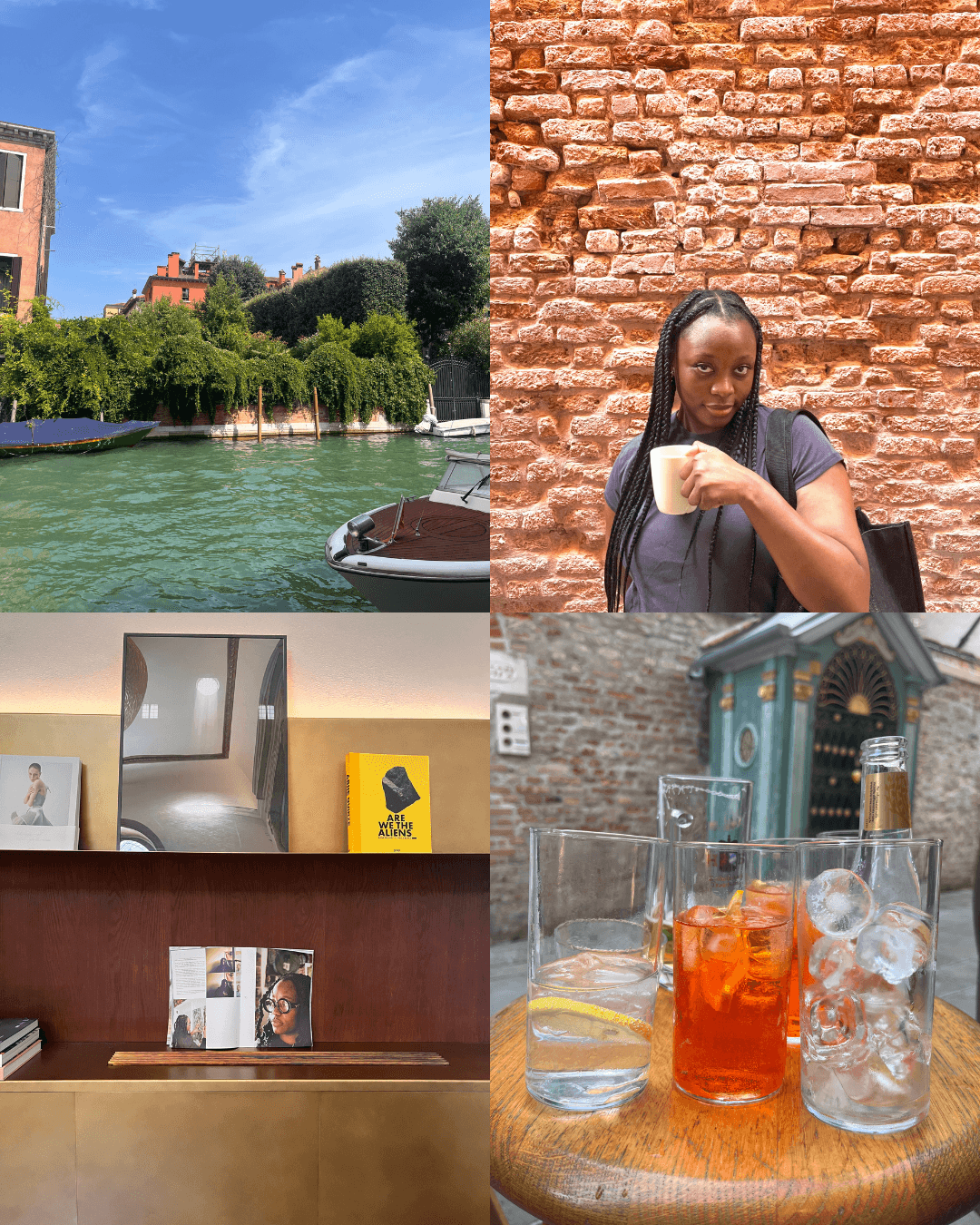
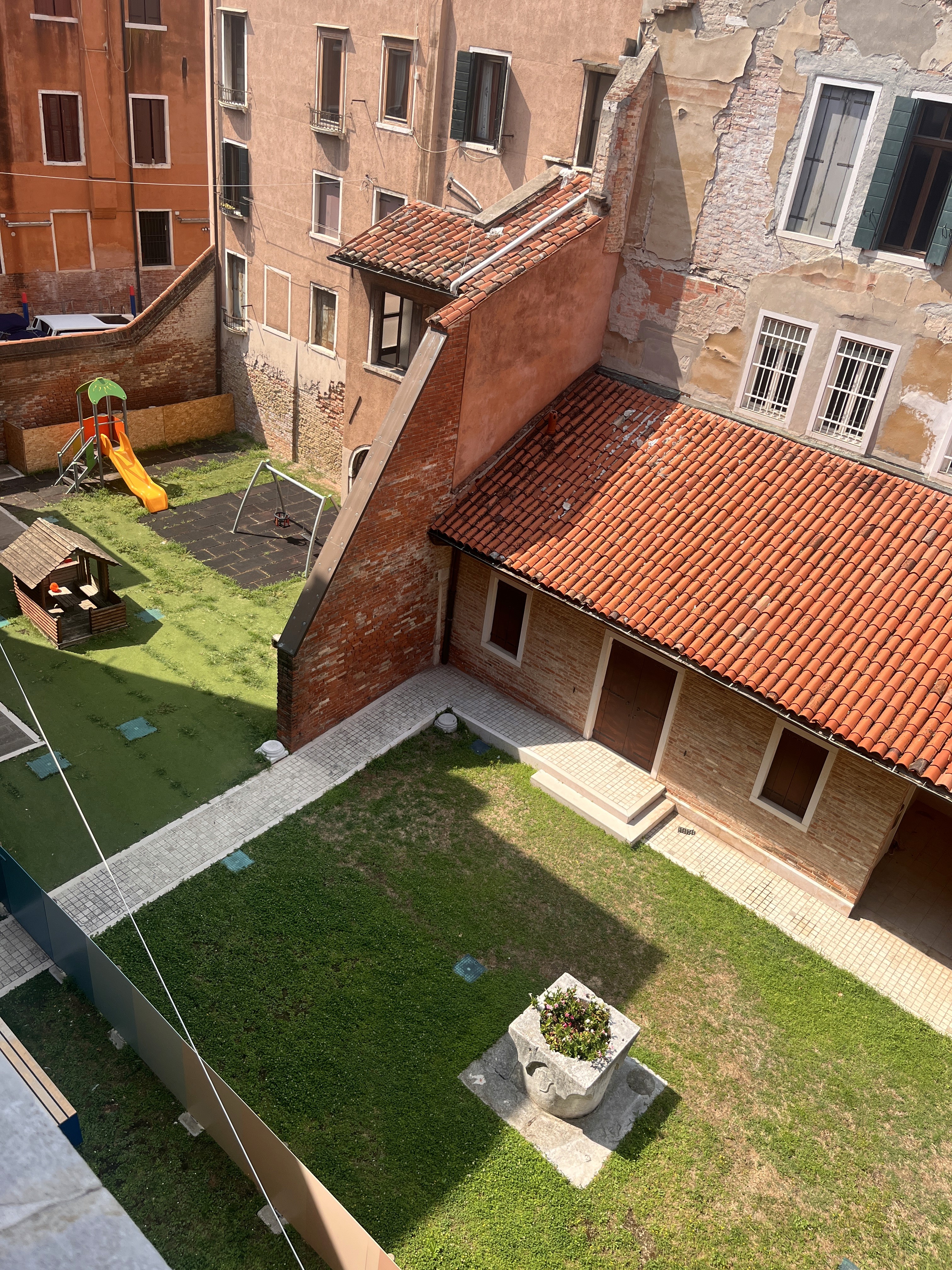
My mornings were actually very simple. The studios were based inside the church, just a short walk from where we were staying, so every day began with that walk before heading straight into the studio. My favourite part of the morning was looking up through the narrow passage between the church and our accommodation. The walls were this beautiful coral, peachy-red colour, and against the bright blue Venetian sky, it created the most incredible contrast. It was one of those moments that stopped me in my tracks every single day.
From 10 o'clock onwards, I was usually working until the evening. Venice has a really interesting rhythm. It's quieter, slower, and it encourages you to pay attention. In the evenings, after dinner, I'd usually go for a walk and simply observe the city. There's a certain calmness to Venice that's difficult to describe, but it definitely stayed with me.
Residencies often pull artists out of their usual rhythm. What's been the biggest shift — in how you work, what you make, or how you think about your practice — since arriving in Venice?
The biggest shift wasn't really in my practice; it was in my daily rhythm. Venice moves at a different pace, and because you're walking everywhere, you naturally become more present and notice things you might otherwise miss.
What surprised me was how adaptable my practice is. Once I'm in the studio, I'm completely immersed, wherever I am in the world. The residency reminded me that while your surroundings can influence your perspective, the curiosity that drives the work comes with you.
What work did you actually create during your time at Etnia? Walk us through a specific piece — what it's made of, what it's responding to, and how it came together in that space.

During the residency, I created a handwoven raffia headpiece alongside a matching pair of glasses. I hand-dyed the raffia before wrapping and weaving it around both forms, drawing on traditional weaving techniques while researching the cultural history of raffia as both a material and a craft.
As the pieces developed, they unexpectedly began to resemble vintage aviator or pilot headgear. I always enjoy those moments when the material starts to lead the process rather than the other way around. The final pieces became a conversation between traditional craftsmanship and contemporary design, exploring how a centuries-old making technique can continue to evolve through new forms.
In what ways is this body of work pushing your practice into new territory — new materials, scale, themes, or techniques you hadn't explored before Venice — and how do you see it feeding into what comes next?
This residency allowed me to continue exploring materials, something I've been interested in for the past few years, but through a completely different process. I'd never worked with raffia in this way before, so there was a lot of experimentation, from dyeing the fibres to understanding how they could be wrapped and woven around unconventional forms like eyewear and headwear.
More importantly, it changed the way I think about craft. I became interested in how traditional making techniques can move beyond their original function and find new relevance through contemporary design. I don't see this as a one-off material experiment; it feels like the beginning of a new direction in my practice, and I'm excited to see where it leads.
more stories