
In Conversation
“There’s Melodrama in the Way We Make Our Films”: Director Daniel Oriahi on The Secret Lives of Baba Segi’s Wives
Following its European premiere at the BFI London Film Festival, Daniel Oriahi discusses the demands of adapting Lola Shoneyin’s novel for the screen and the complications of Nollywood’s storytelling heritage.
SHARE
6 Mins. Read

Lola Shoneyin’s novel The Secret Lives of Baba Segi’s Wives tells the story of Baba Segi—an imposing man in physical stature as well as economic standing—his first three wives, the delicious and tragic secrets that bind them, and how those secrets unravel with the arrival of an outsider: his fourth wife, Bolanle.
Published in 2010, the novel has been adapted for the screen sixteen years later. The film had its European premiere at the BFI London Film Festival ahead of its release in Nigerian cinemas on 4 December 2026.
Shalom Esene speaks to Oriahi about translating interiority from page to screen, balancing satire and tragedy, and Nollywood’s inheritance of melodrama, which he traces to a theatrical tradition of self-expression and tempers with restraint.
This conversation has been condensed and edited for length and clarity.
ARA: When you approached The Secret Lives of Baba Segi’s Wives, what was it about the novel that you wanted to portray on the screen? Did the process of adapting it shift your understanding of any of its characters or their motivations?
DO: Like most people, I experienced the book years before, as a reader. But when you’re given a big responsibility for an adaptation, there’s a different approach. First, I read the book again, several times, to reacquaint myself with the story. Finally, I read it as a filmmaker. I liked the dark humour, the family drama. But now it was more about how the women had defined their agency within a patriarchal system. It was survival through silence and secrets, and I felt that was very profound. Another thing that really struck a chord was that it felt like a coming-of-age story. Bolanle comes into this household with a perception of herself, and during the course of trying to fit into this new patriarchal system that she wants to be part of, ironically, she’s becoming. She uncovers why she sees herself in a particular light. And at the end, she accepts who she is and becomes emancipated.
When you read [the novel], it’s a very first-person, very descriptive story. We see Baba Segi’s journey, we see Iya Segi’s. We go into the minds of these people and we understand how they perceive the world and why they make the decisions they make. But we didn’t want to villainise anybody. Even Baba Segi, with his patriarchal mindset, with his very rigid approach to life, still has a humanness about him, which I felt we needed to portray. It’s not an “us versus them” narrative. It’s just people who were put in this system trying to survive because that’s the only way they can have an identity in society. I felt that was very interesting to show.
ARA: It’s also interesting because there’s a lot to balance there. The story moves between satire and tragedy, polygamy and female solidarity, the traditional obsession with virility and women’s agency within a patriarchal system. How did you approach balancing these competing elements without allowing one to overshadow the others?
DO: Film has a different rhythm compared to literature. A book can go into characters’ heads and thoughts for pages, but a camera does all that explanation in one frame: how you block the characters, the kind of costumes they wear, even the way you structure the dialogue, so that it doesn’t become overly caricature-ish or melodramatic. I’m Nigerian and I grew up watching a lot of foreign films, but at the same time I’m very aware of the dynamics and aesthetics of Nollywood. I’ve come to understand that as a Nigerian filmmaker, I have to make films that are relatable to the Nigerian experience, that Nigerians can identify with. There’s melodrama in the way we make our films. You can trace that history to the fact that we come from a very theatrical expression of self in the art form.
ARA: We’re a very dramatic people.
DO: And then we were influenced by telenovelas, which are more exposition than true dialogue and expression and visual conception. So for me it became, how do you find that balance?
I know you’ve read the book. So you know there are some major scenes that are impossible not to include in the film. You layer those events and those sequences to fit into the structure of your story, because at the end of the day you have a limited timeframe. You have two hours. So how many things can you fit in while still keeping the story intact? And the story is about Bolanle’s journey. As much as the story focuses on all these women’s lives, our main character is Bolanle. Her story is the core, and that shapes what you keep and which encounters are most important.
ARA: I loved how you touched on character interiority; how a book can have pages and pages of interiority but you don't have that luxury on the screen. In a previous interview about The Weekend, you talked about asking your actors to exercise restraint so they wouldn’t give away what the characters knew. In The Secret Lives of Baba Segi’s Wives, where secrets drive the story but the audience also needs to understand the inner lives of the wives, how did you decide what to reveal through their performances? What are some of the artistic choices that you made?
DO: We tried to honour the book, which already gave us a rhythm and a structure to play with. I’m a guy who really works with restraint. We were working with dark humour, which can be easily misinterpreted as comedy, especially in the Nigerian space. So I tried as much as possible to keep my actors contained while still staying relevant to the characters that they were playing. The book clearly defines their characteristics, but you don’t want to go overboard into caricature. For instance, Iya Segi has the grunting thing she does, where she’s always clearing her throat in the book. But in the film we only did that like twice. So you keep some things, you keep some elements. And I was working with very amazing actors, so they were very cool to go with the perspective I’d constructed for the characters. I try to always maintain a balance of some sort.

ARA: Last question. What do you want an international audience to take away from a Nigerian film, and what do you want preserved when a story deeply rooted in our social and cultural context travels beyond it?
DO: One thing is how we regard family in this part [of the world]. If you watch my films, they’re concerned with family dynamics. It’s something I really gravitate to in my stories. We’re communal in mindset. People make decisions for themselves, but at the end of the day, we work better as a family unit. I always want to keep that. You might say, “Oh, but this film doesn’t necessarily make that argument. It’s very chaotic—you have so many wives and children.” But even within that chaos, there’s a kind of rhythm.
more stories
In Conversation
In his first solo exhibition in Ghana, Frank Coffie builds paintings backwards — yarn first, paint last — from family memory, discarded fabric and pain.
8 mins Read

In Conversation
In When the Center Holds, the Nigerian artist speaks with Sabo Kpade about suspension, memory, postcolonial thought, colour and why drawing becomes an x-ray into painting.
6 Mins Read

In Conversation
The painter on returning to Accra, colliding London with Obuasi, and why she lets a painting go above 90 percent.
8 Mins Read

In Conversation
Recorded at ARAMI, Lagos, during a press preview for Pure Water, Chika Idu’s solo exhibition with SMO Contemporary Art. In conversation with Sunshine Alaibe, Idu traces water through childhood drought, environmental precarity, the Atlantic slave trade and the changing representation of women in his work. By Sunshine Alaibe Edited by Sabo Kpade 17 September 2026. This conversation has been condensed, reordered and edited for clarity.
10 Mins Read

In Conversation
Gabriel Selassie Tsagli left Ghana at eleven and lived in Germany for twenty-six years. He returned to Accra in 2024 and made the paintings in Son of Kafui—his first proper solo exhibition at home—in a single stretch between February and this summer. He does not use a colour palette, works on many canvases at once, and calls the show a graduation. This conversation was recorded in Accra in August 2026 and has been edited and condensed for length and clarity.
6 Mins Read

In Conversation
Orry Shenjobi on her Venice residency: raffia craftwork, studio life, and what she learned — with takeaways for artists eyeing their own residency.
4 Mins Read

In Conversation
Ralph Waldo Emerson, in his essay "Society and Solitude," wrote, "We do not believe our own thought; we must serve somebody; we must quote somebody; we dote on the old and the distant; we are tickled by great names; we quote their opinions; we cite their laws." For Ikechukwu Nduka, he stands as the antithesis of the society Emerson critiques. He defied societal expectations and familial disapproval to pursue his passion for art, successfully contending the dependence on the opinions of others. "They say art is therapy, but while creative minds like us are creating this 'therapy', I think we need it the most, or rather we need it first." He aptly expressed the stark pressure.
7 Mins Read

In Conversation
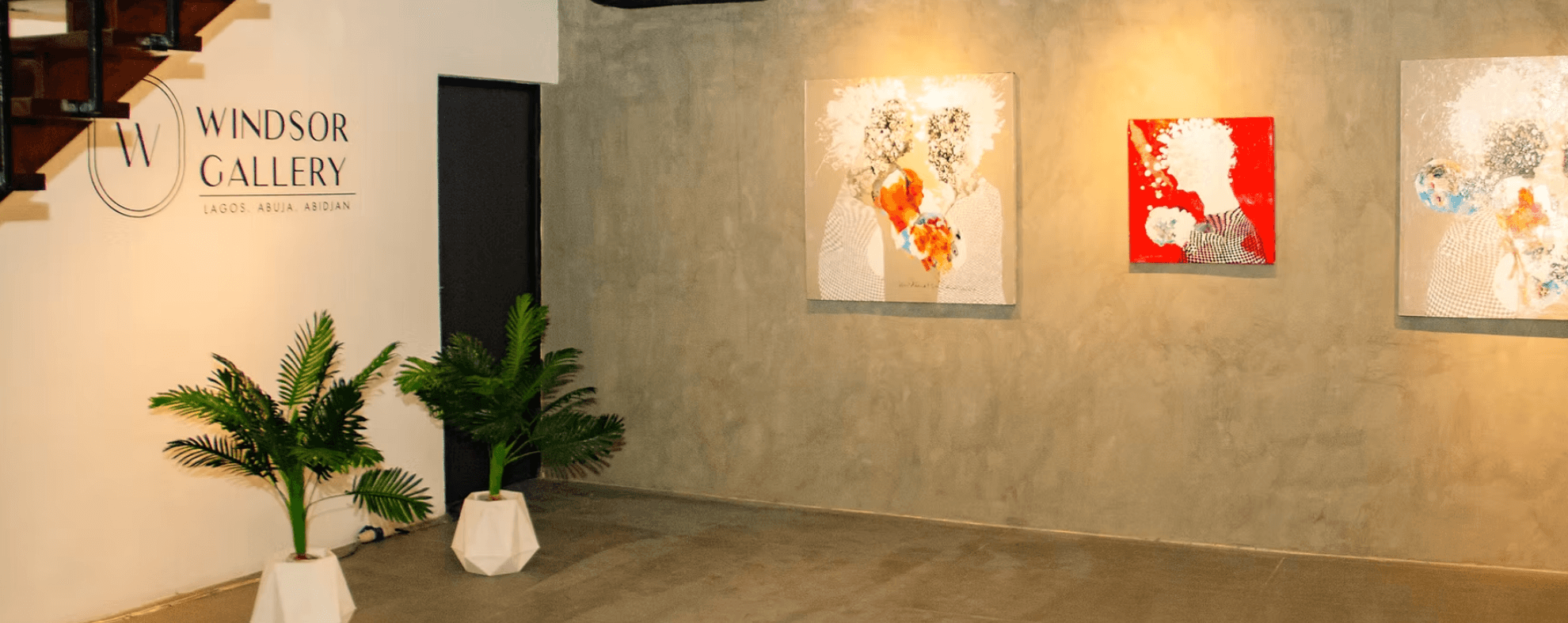
Windsor Gallery is becoming a prominent player in the West African art scene, expanding its influence from Lagos to Abuja and Abidjan in just a few short years. This growth signals not only the gallery's ambition but also its commitment to creating a platform for contemporary African art.
6 Mins Read
In Conversation
In Ethiopia, women vendors are often overlooked and marginalized, despite being the backbone of the market. Their struggles are perpetuated by societal perceptions of their stature. Challenging these norms, Tadesse Mesfin's solo exhibition, "Where We Coalesce," currently on view at Addis Fine Art (until November 30, 2024), seeks to reframe the narrative surrounding Ethiopian women.
5 Mins Read

In Conversation
In the midst of shifting societal norms and increasing complexity around identity, "Freedom in Multitudes" asks important questions about Black and African identity. Through the work of nine international artists, this 1897 Gallery exhibition explores the nuances of self-expression.
5 Mins Read

In Conversation
On this podcast, we delve into the stories of Key Industry Players in different art ecosystems on the African continent. We speak to Gallerists, Art Historians, Curators, Advisors & Art Directors to get insight on their markets domestically.
1 Min Read

In Conversation
Within Nigeria’s creative scene, Olufisayo Bakare stands as a multifaceted force. Born in Lagos to a family with a rich art and design heritage, her interests took her through the intricacies of various industries. From aspiring artist to entrepreneur and curator, Olufisayo is the visionary behind the brand, interior Living (Intlvng) and The Yellow of Lagos.
7 Mins Read