
In Conversation
“Drawing Is Not a Minor Art Form”: Sitor Senghor on AKAA 2026
The fair’s artistic director on pairing photography with works on paper, how Paris differs from London, and why an artist’s first gesture on paper matters.
SHARE
8 Mins Read

AKAA (Also Known As Africa) held its 11th edition at the Carreau du Temple in Paris from 23 to 25 October. With 2026 marking the bicentenary of photography, AKAA this year paired photography with works on paper. Its artistic director, Sitor Senghor, discusses why the fair brought these two forms together, how AKAA’s sits beside 1-54 and the possibilities of an artist’s first gesture on paper.
This interview has been translated from French and edited for length and clarity.
Art Report Africa: 1-54 closed in London recently. How did you try to position AKAA this year?
SS: 1-54 and AKAA are the two main contemporary African art fairs, but we cater to two different markets: London and Paris.
I would say that London is historically the more established market, at least from a commercial perspective. The market for contemporary African art developed there largely thanks to the Nigerian and Ghanaian diasporas, which supported artists from their countries and played an important role in making the fair successful.
In Paris, AKAA initially developed with a much more French approach, one that places greater emphasis on culture rather than focusing exclusively on the market. There is a strong commitment to cultural exchange and transmission, and that remains a defining part of AKAA’s identity.
We also have a role in discovering and promoting artists who have not yet received much exposure. That is something we are very attached to. Of course, we are fully aware that we operate within an art market, so we also need to present established artists. But the two fairs are entirely complementary because they serve different markets.
Today, from a market perspective, I would say that Paris has certain advantages. Although there is still an enormous amount of money in London, we benefit from being part of the European Union and therefore do not face the same consequences of Brexit. We also have Art Basel Paris, which attracts collectors from all over the world.
ARA: Why bring photography and works on paper together?
Sitor Senghor: The main idea this year was to give photography greater visibility, because I feel that African photography is not given enough space, apart from a few major names that are already well established. There is such creativity and diversity among photographers across the continent that I felt it was important to showcase it.
Photography has traditionally been regarded as a minor art form compared with painting or sculpture. So I thought, if we are going to present photography, which is considered a minor art, why not associate it with works on paper, which are also often regarded as a lesser art form? Works on paper are generally seen as preparatory studies, drafts or sketches, and even today, their market value remains significantly lower than that of the so-called fine arts.

ARA: How do collectors respond to works on paper compared with paintings?
SS: Because works on paper are generally more affordable, they can provide an entry point for first-time collectors. You can start by collecting works on paper and then gradually move on to more significant acquisitions.
ARA: What does the bicentenary of photography mean for a fair dedicated to Africa?
SS: The bicentenary of photography is a worldwide celebration. As far as Africa is concerned, placing a particular focus on photography allows us to showcase a number of artists who are not usually given much visibility.
With today’s new technologies, photography has become accessible to artists who have not necessarily attended art schools or trained in professional photography studios under established masters. It has become a medium that virtually anyone can explore.
When you see the results, it is astonishing. There are genuine masterpieces, with extraordinarily powerful approaches to subjects such as identity, contemporary environmental issues and other pressing concerns. What makes these works particularly compelling is that they offer a perspective rooted in the continent itself, shaped by its history, its suffering and its experiences. They reveal aspects of Africa that no one else can portray in quite the same way.

ARA: You describe paper as a medium that offers tremendous creative freedom. What can artists achieve on paper that other media do not allow?
SS: What interests me most about works on paper is the immediacy of that first gesture. It is something very natural. That initial drawing, that first attempt, marks the very beginning of inspiration, and I always find that magical.
There is something incredibly powerful about it. I am not saying that developing a work further through painting necessarily improves it. What fascinates me is precisely that first gesture, that spontaneity, the way something emerges directly from the artist’s mind. To me, that is essential.
Take the early sketches of Western artists such as Michelangelo or Leonardo da Vinci. They are absolutely magical, and they possess all the expressive power of their sculptures or monumental paintings.
To take an African example, look at the watercolours and drawings by Ouattara Watts. Everything is already there. There is no need to translate them into an enormous two-metre canvas. Drawing is not a minor art form: his entire artistic universe is present in those watercolours.
more stories
In Conversation
Following its European premiere at the BFI London Film Festival, Daniel Oriahi discusses the demands of adapting Lola Shoneyin’s novel for the screen and the complications of Nollywood’s storytelling heritage.
6 Mins. Read
In Conversation
In his first solo exhibition in Ghana, Frank Coffie builds paintings backwards — yarn first, paint last — from family memory, discarded fabric and pain.
8 mins Read

In Conversation
In When the Center Holds, the Nigerian artist speaks with Sabo Kpade about suspension, memory, postcolonial thought, colour and why drawing becomes an x-ray into painting.
6 Mins Read

In Conversation
The painter on returning to Accra, colliding London with Obuasi, and why she lets a painting go above 90 percent.
8 Mins Read

In Conversation
Recorded at ARAMI, Lagos, during a press preview for Pure Water, Chika Idu’s solo exhibition with SMO Contemporary Art. In conversation with Sunshine Alaibe, Idu traces water through childhood drought, environmental precarity, the Atlantic slave trade and the changing representation of women in his work. By Sunshine Alaibe Edited by Sabo Kpade 17 September 2026. This conversation has been condensed, reordered and edited for clarity.
10 Mins Read

In Conversation
Gabriel Selassie Tsagli left Ghana at eleven and lived in Germany for twenty-six years. He returned to Accra in 2024 and made the paintings in Son of Kafui—his first proper solo exhibition at home—in a single stretch between February and this summer. He does not use a colour palette, works on many canvases at once, and calls the show a graduation. This conversation was recorded in Accra in August 2026 and has been edited and condensed for length and clarity.
6 Mins Read

In Conversation
Orry Shenjobi on her Venice residency: raffia craftwork, studio life, and what she learned — with takeaways for artists eyeing their own residency.
4 Mins Read

In Conversation
Ralph Waldo Emerson, in his essay "Society and Solitude," wrote, "We do not believe our own thought; we must serve somebody; we must quote somebody; we dote on the old and the distant; we are tickled by great names; we quote their opinions; we cite their laws." For Ikechukwu Nduka, he stands as the antithesis of the society Emerson critiques. He defied societal expectations and familial disapproval to pursue his passion for art, successfully contending the dependence on the opinions of others. "They say art is therapy, but while creative minds like us are creating this 'therapy', I think we need it the most, or rather we need it first." He aptly expressed the stark pressure.
7 Mins Read

In Conversation
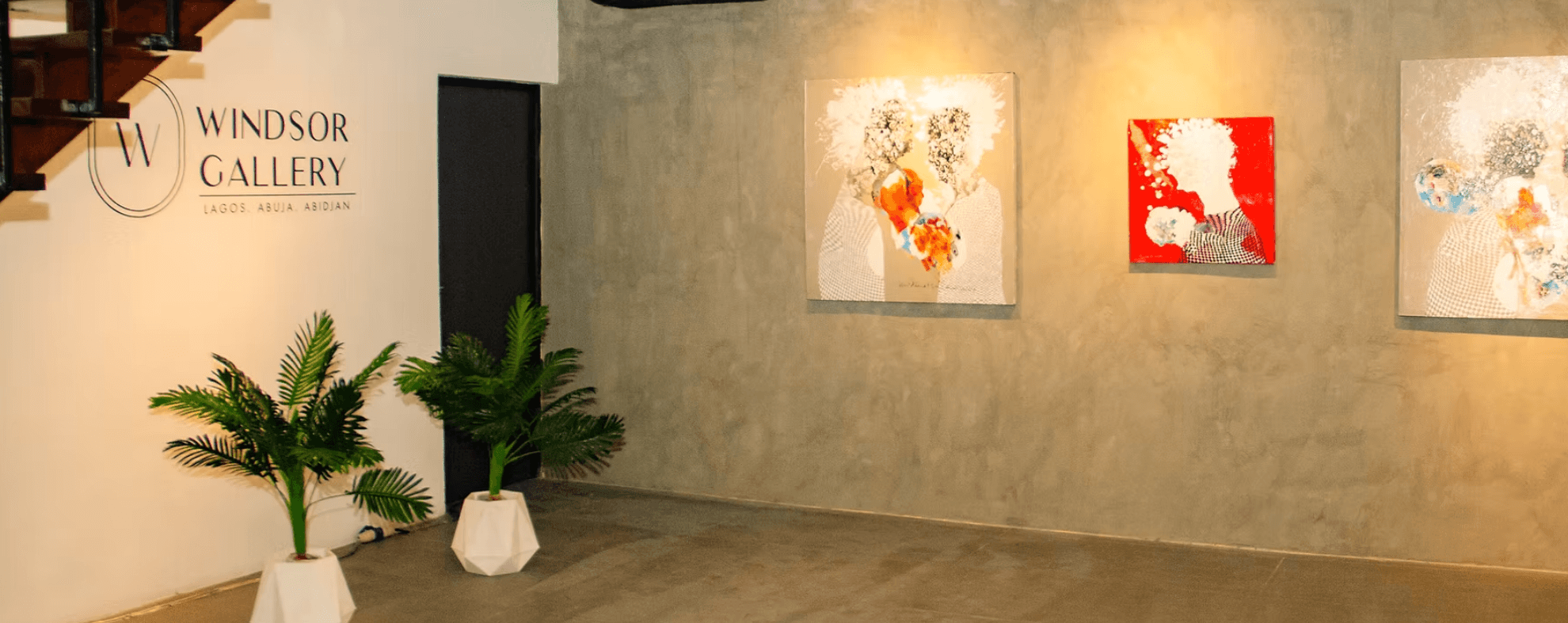
Windsor Gallery is becoming a prominent player in the West African art scene, expanding its influence from Lagos to Abuja and Abidjan in just a few short years. This growth signals not only the gallery's ambition but also its commitment to creating a platform for contemporary African art.
6 Mins Read
In Conversation
In Ethiopia, women vendors are often overlooked and marginalized, despite being the backbone of the market. Their struggles are perpetuated by societal perceptions of their stature. Challenging these norms, Tadesse Mesfin's solo exhibition, "Where We Coalesce," currently on view at Addis Fine Art (until November 30, 2024), seeks to reframe the narrative surrounding Ethiopian women.
5 Mins Read

In Conversation
In the midst of shifting societal norms and increasing complexity around identity, "Freedom in Multitudes" asks important questions about Black and African identity. Through the work of nine international artists, this 1897 Gallery exhibition explores the nuances of self-expression.
5 Mins Read

In Conversation
On this podcast, we delve into the stories of Key Industry Players in different art ecosystems on the African continent. We speak to Gallerists, Art Historians, Curators, Advisors & Art Directors to get insight on their markets domestically.
1 Min Read

In Conversation
Within Nigeria’s creative scene, Olufisayo Bakare stands as a multifaceted force. Born in Lagos to a family with a rich art and design heritage, her interests took her through the intricacies of various industries. From aspiring artist to entrepreneur and curator, Olufisayo is the visionary behind the brand, interior Living (Intlvng) and The Yellow of Lagos.
7 Mins Read